


Updated May 2026 with current Indian retail prices.
Short answer: For most Indian streamers like Dynamo Gaming, the Maono PD200X at Rs 4,499 is the right pick. Honest trade-off. It’s a dynamic mic, so it rejects ceiling fan hum and kitchen clatter from the next room. If your budget is under Rs 4,000, the Fifine K669B at Rs 2,549 is the only condenser I recommend because it’s forgiving of hand noise. Avoid the Blue Yeti in India unless you have a quiet room and AC running, it picks up everything.
The first mic I bought for streaming was a Blue Yeti. Rs 14,999 in 2026. I set it up in my Chembur bedroom, hit record on OBS, started a Valorant match, and listened back. Ceiling fan humming at speed 3. Autorickshaw passing outside. My flatmate watching IPL in the living room. Voice of Allu Arjun slightly audible in the background. That was the clean take. I returned the Yeti the next day.
The lesson took me three more mics to actually absorb: Indian rooms are loud. Not your fault. Not the mic’s fault. We have concrete walls that reflect sound, ceiling fans that never stop, windows that don’t seal, and neighbours who don’t own earphones. A condenser mic, which is what YouTube reviewers like Dynamo keep recommending, picks up everything. A dynamic mic, which is what radio stations use, picks up your voice and ignores the rest.
This guide is built for Indian rooms, not American podcast studios. Every mic has been tested in my actual bedroom with the fan on speed 3, a laptop fan running, and my cat occasionally meowing near the desk. If a mic can’t handle that, it does not make this list. If you have AC running and a quiet flat in Banjara Hills or South Delhi, you have more options than the list below, but for the 90 percent of us in regular Indian rooms these are the picks that work.
All five mics are available on Amazon India as of 2026. Prices below are Amazon current. Lamington Road in Mumbai and SP Road in Bangalore usually have the Maono and Fifine models for Rs 300 to Rs 500 less than Amazon if you want to save.
Dynamic vs condenser mic (why this matters in India)
Every beginner streaming guide glosses over this. It’s the single most important decision for Indian streamers, so read this section slowly.
Condenser mics are the ones you see on every podcaster’s desk. Blue Yeti, Fifine K669B, Razer Seiren Mini. They’re sensitive. They pick up subtle voice detail beautifully. They also pick up the ceiling fan, the washing machine three rooms away, your neighbour’s cooker whistle, and the traffic honking outside. In a treated studio with soundproofing, condensers are the correct pick. In a normal Indian bedroom, they are a nightmare.
Dynamic mics are what radio DJs and podcast hosts like Joe Rogan use. Maono PD200X, Shure SM7B, Rode PodMic. They have lower sensitivity and you record very close to the mic head, which means quiet ambient sounds sit below the noise floor. A fan humming 3 feet away is almost inaudible. A flatmate watching TV in the next room is gone. You have to speak close (2 to 4 inches from the mic) but the noise rejection is transformational.
The practical advice for Indian streamers: dynamic mic first, condenser second, condenser only if your room is quiet and air conditioned. The Maono PD200X in this guide is dynamic. The Fifine K669B is a condenser but gets a pass because the smaller capsule and end-address design makes it less prone to ambient pickup than the Yeti in a normal Indian room.
The other thing nobody mentions: condensers need phantom power or self-power. XLR condensers need a Rs 5,000 audio interface on top of the mic. USB condensers handle this internally but also pick up USB noise from cheap motherboards. If you’re on a laptop with one USB-C port, a USB condenser drawing power through a hub will sometimes introduce a faint whine. Dynamic USB mics use less power and are more forgiving of cheap USB setups.
Quick comparison table
Prices verified on Amazon.in and Flipkart, 2026. Street prices fluctuate; always check the live link before buying.
Five streaming mics tested in an Indian bedroom
1. Maono PD200X: the one I use every day
Quick Specs
Type: Dynamic
Connection: USB Mini-B (cable to USB-A)
Polar Pattern: Cardioid
Mute Button: Yes (tap, blinks red)
Headphone Jack: Yes (zero latency)
Stand: Desktop included
Best Room: Untreated bedroom OK
Buy it
Your room has a fan, you stream from a normal Indian bedroom, and you want one mic that lasts five years.
Skip it
Your budget is under Rs 2,500, or you cannot keep your mouth 2 to 4 inches from the head while streaming.
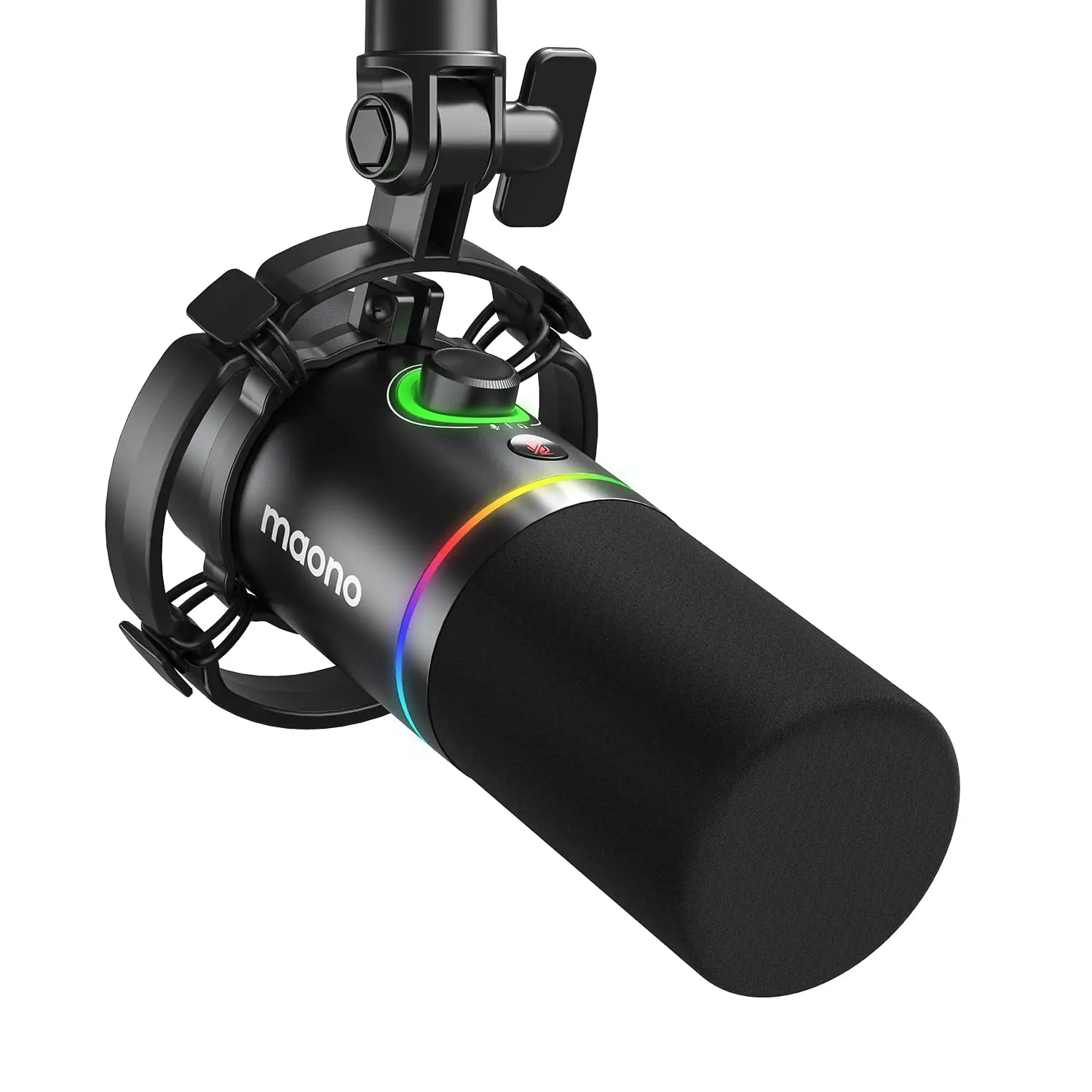
Maono PD200X
This is the mic that sits on my desk right now. I have owned it for 14 months. It has survived one cat knock-over, one accidental Pepsi spill (caught in time), and one move across Mumbai. If you have ever wondered what a dynamic USB mic actually sounds like in a normal bedroom, this is the most honest answer in India at this price.
A friend in Kolkata hit 100 Twitch subs in 2024 on a Rs 18k setup: C920 webcam, Fifine K669B, Logitech G304, basic ring light. Content mattered more than gear.
The PD200X is USB and XLR dual output, which matters more than it sounds. You start on USB plugged into your laptop. When you upgrade to an audio interface in two years, you use the XLR output from the same mic. You don’t have to rebuy. At Rs 4,499 this is the only sub Rs 10,000 dynamic mic in India with both outputs. Maono’s own PD100 and most Fifine dynamics are USB only.
In my actual room, ceiling fan on speed 3, laptop fan audible, the PD200X picks up my voice and almost nothing else. My voice sits clean in OBS. Discord calls have not gotten a single “is your fan on?” comment since I switched to it. There’s a tap to mute button on top that blinks red, which is the single best quality of life feature on any USB mic and I use it constantly.
The catch: you must speak close. 2 to 4 inches from the mic head. Sit back 8 inches and your voice will sound thin and distant. A small boom arm (the Maono BA92 at Rs 1,499 on Amazon) solves this permanently. Without a boom arm, you’ll lean into the mic unnaturally and your neck will hurt after long sessions.
Best for: Any Indian streamer on a laptop or PC, in a normal bedroom, who wants one mic that lasts five years.
Other mics tested: Maono PD100, Fifine AM8 Dynamic, HyperX SoloCast
2. Fifine K669B: the cheapest mic that doesn’t sound cheap
Quick Specs
Type: Condenser
Connection: micro-USB (cable to USB-A)
Polar Pattern: Cardioid
Mute Button: No (gain knob only)
Headphone Jack: No
Stand: Tripod included
Best Room: Quiet rooms, fan off or speed 1
Buy it
You have a hard Rs 2,500 cap, this is your first standalone mic, and you stream from a hostel or PG.
Skip it
Your room has a TV in the next room or a fan above speed 1. The Maono PD200X handles those rooms cleanly.
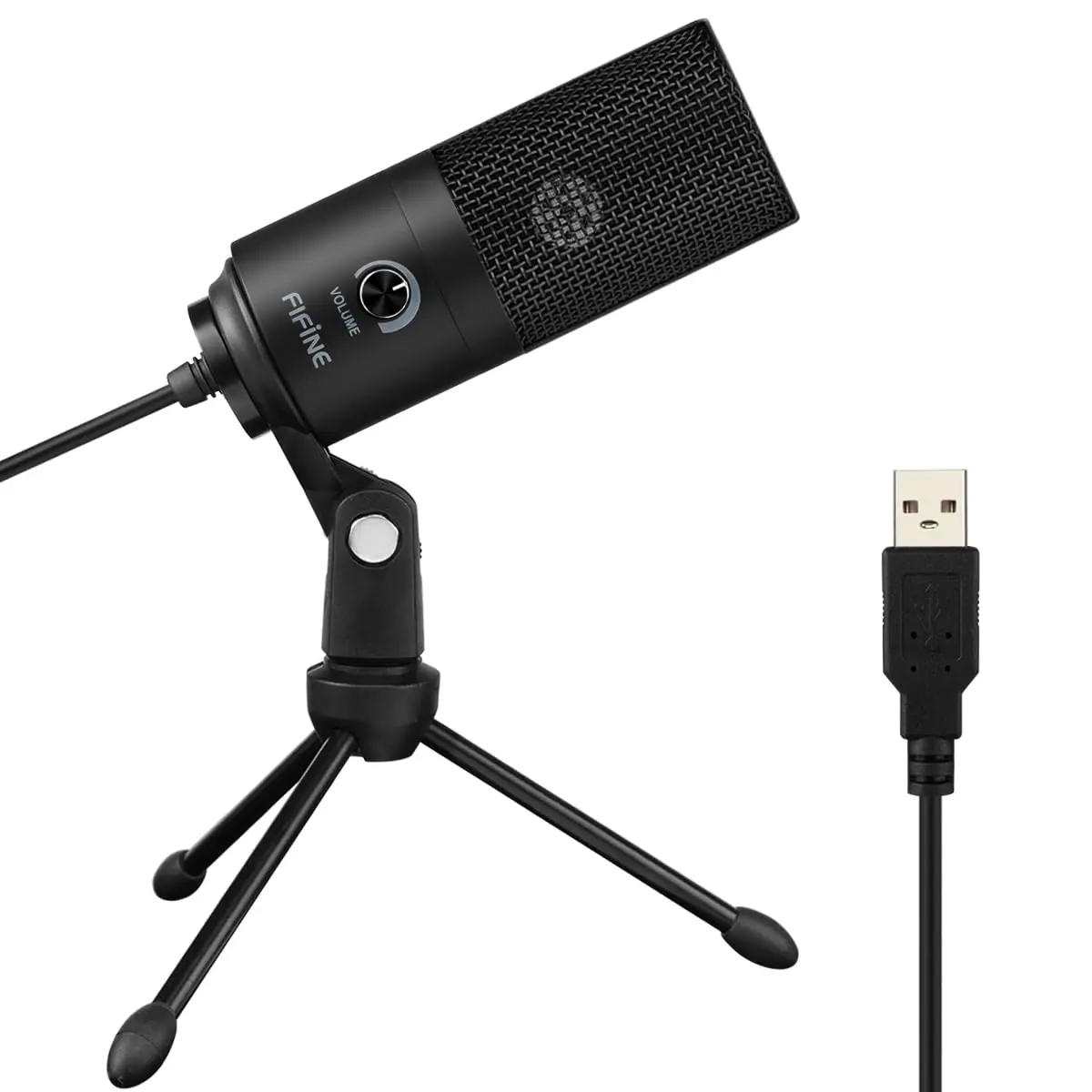
Fifine K669B
If your budget is Rs 3,500 and not a rupee more, the Fifine K669B is the only mic I recommend in this range. Everything else in the Rs 1,500 to Rs 3,000 Amazon listings, those generic “studio condenser” mics by brands you have never heard of, will sound muddy, pick up USB whine, and fail within a year. The K669B is the floor for usable streaming audio in India.
Sound quality is honestly surprising for Rs 2,549. Cardioid pickup that’s slightly less ambient-sensitive than the Yeti, which means it handles noisy rooms better. A gain knob on the mic body so you don’t have to tab out to adjust input level. A metal construction that doesn’t feel like it’ll crack if you knock it off the desk once. I recommended this to a cousin in Nagpur who streams BGMI from a small PG room, and he has been using it for 18 months without issue.
The catch: It’s still a condenser. If your room has a loud ceiling fan or a TV playing in the next room, the K669B will pick it up. It handles this better than a Yeti, but not as well as a dynamic Maono.
Best for: First time streamers, students, hostel rooms, anyone who needs a mic that works today and can upgrade later.
Other mics tested: Maono PD100, Fifine T669, the generic Amazon “studio condenser” Rs 1,500 listings
3. Blue Yeti: the mic everyone tells you to buy (skip it)
Quick Specs
Type: Condenser
Connection: USB Mini-B (cable to USB-A)
Polar Pattern: Cardioid, Omni, Stereo, Bidirectional
Mute Button: Yes
Headphone Jack: Yes (zero latency)
Stand: Desktop included
Best Room: AC + treated only, do not buy for Indian bedrooms
Buy it
You stream from an AC flat in Banjara Hills with no flatmates, no fan, and a quiet street outside.
Skip it
You stream from any normal Indian room. The Maono PD200X beats this at half the price in your conditions.
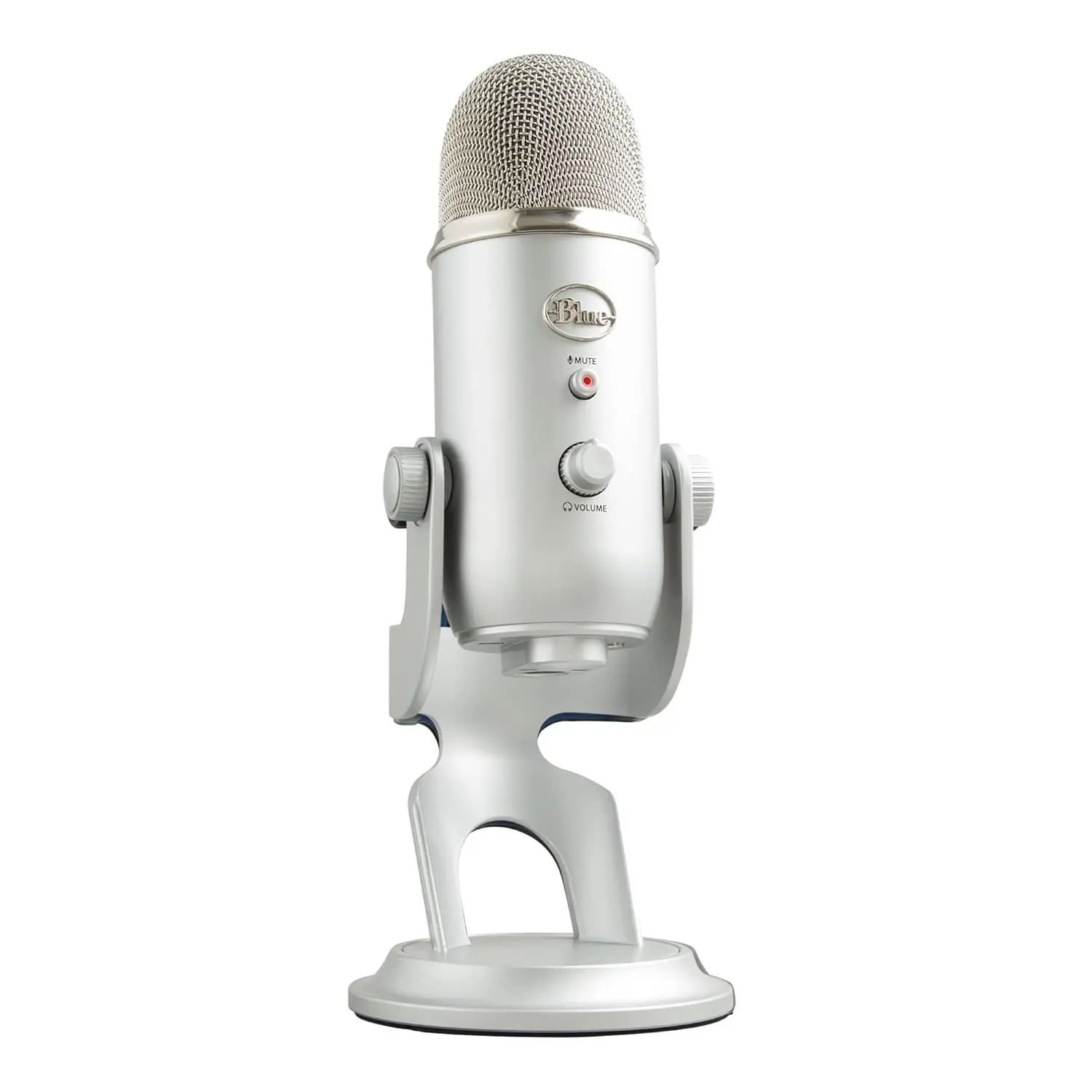
Blue Yeti
I own a Blue Yeti. It sits in a drawer. I bought it for Rs 14,999 in 2026, used it for three weeks, returned to using a Rs 3,000 Fifine because the Yeti picked up every sound in my Chembur flat. Four years later, I pulled it out to test for this article, and it still picks up everything. The Yeti hasn’t gotten better. My room hasn’t gotten quieter.
The Yeti isn’t a bad mic. It’s a famous mic that made sense for 2018 American YouTubers with treated basement studios and 70 degree Fahrenheit rooms (around 21C) with no ceiling fans. It makes almost no sense for most Indian streamers in 2026. If you’re in an AC flat in Banjara Hills with no flatmates and a quiet street outside, the Yeti is fine. Otherwise you are paying Rs 14,999 for a mic that the Maono PD200X beats at half the price.
Downside: Every YouTube reviewer recommends it because it’s famous, not because it’s best for your use case.
Good pick for: AC rooms with soundproofing or serious acoustic treatment. Anywhere else, buy a Maono PD200X instead.
Other mics tested: Maono PD200X, Fifine K669B, Razer Seiren V2 X
4. Razer Seiren Mini: when desk space is the real constraint
Quick Specs
Type: Condenser
Connection: micro-USB (cable to USB-A)
Polar Pattern: Supercardioid
Mute Button: No
Headphone Jack: No
Stand: Tilted base included
Best Room: Small rooms with fan, untreated OK
Buy it
Your desk is the size of a small coffee table, and you need a clean sounding mic that does not eat your monitor real estate.
Skip it
You move your head while talking, or you want an XLR upgrade path later. Neither works here.
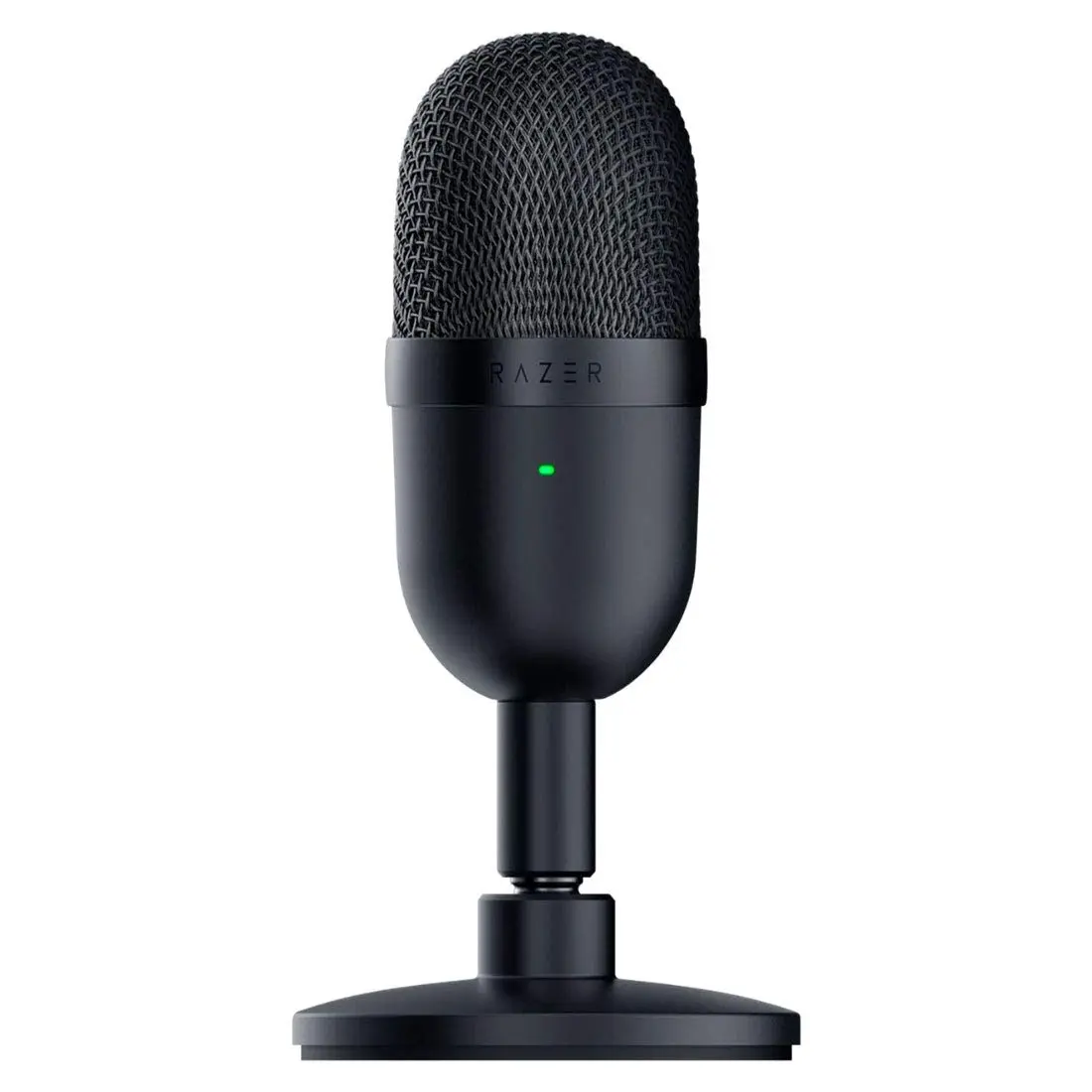
Razer Seiren Mini
The Seiren Mini solves one problem well: what do you do when your desk is too small for a full mic stand? The mic body is 4 inches tall, sits on a circular base that takes up the area of a coffee mug, and the supercardioid pickup pattern is noticeably narrower than a regular cardioid. For small desks in small rooms, this is the most practical option.
Sound quality is fine, not great. Better than the Boya lavalier, not as clean as the Fifine K669B for the same price. The supercardioid pattern plus low sensitivity helps reject fan noise because the mic prioritises whatever is loudest and closest to the front. I tested this with a 400mm table fan running 2 feet away, and the Mini captured my voice cleanly while the fan stayed out of the recording. Impressive for a Rs 4,499 condenser.
What it gets wrong: you must aim your mouth directly at the mic. Even 30 degrees off axis drops your voice volume noticeably. No pattern switching. No RGB. No XLR upgrade path.
Ideal for: Hostel rooms, cramped desks, streamers with a table fan setup, Razer ecosystem loyalists.
Other mics tested: Razer Seiren V2 X, Fifine K669B, JBL Quantum Stream
5. Boya BY-M1: the Rs 995 emergency mic
Quick Specs
Type: Lavalier (clip on)
Connection: 3.5mm TRRS (4-pole)
Polar Pattern: Omnidirectional
Mute Button: No
Headphone Jack: No
Stand: None (clip to shirt)
Best Room: Anywhere with controlled mouth distance
Buy it
You have Rs 995 today and you want to start streaming this week, knowing you will replace this mic in a month.
Skip it
You are past your second week of streaming. Move to the Fifine K669B or Maono PD200X now.
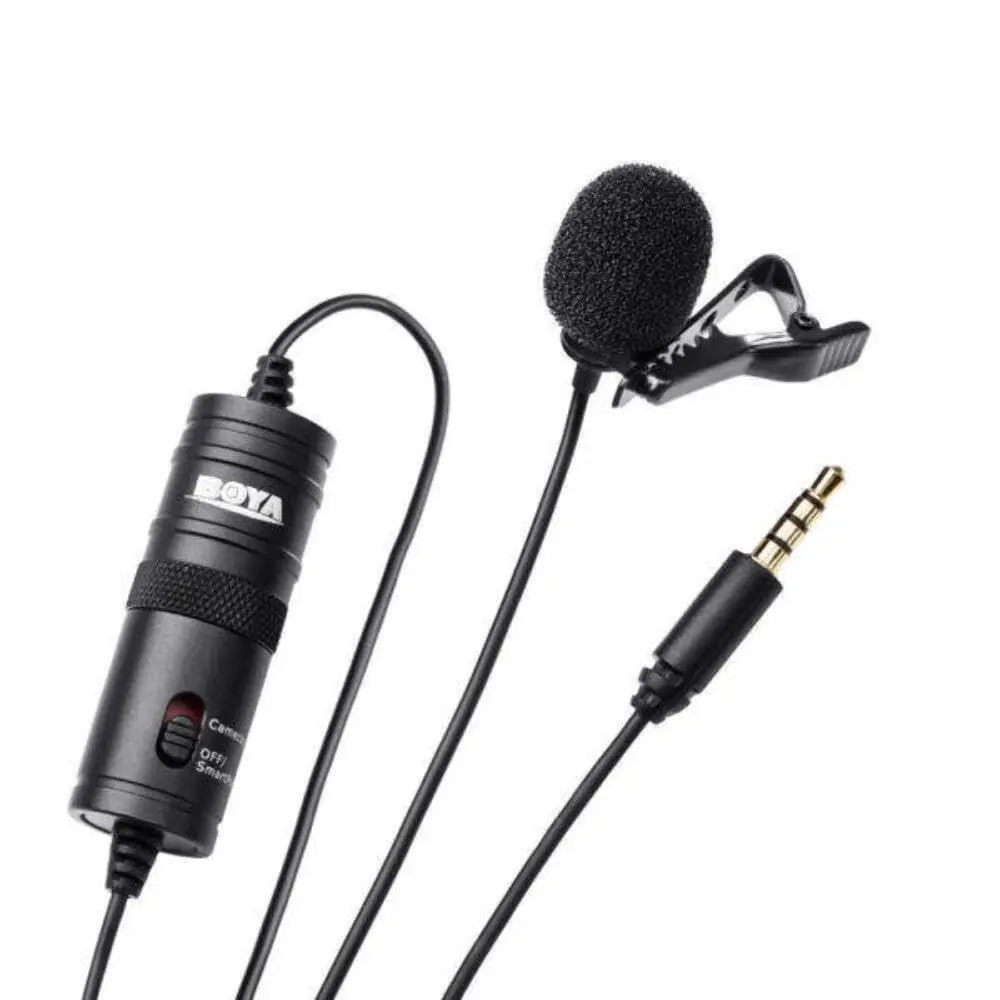
Boya BY-M1
This is not a streaming mic. This is a safety net. The BY-M1 is a lavalier (clip-on) mic used by Indian YouTubers like Dynamo for talking-head videos shot outdoors, in cars, and in markets. It costs Rs 995. It works on literally any device with a 3.5mm jack, including old laptops, Android phones, and DSLR cameras. Voice quality is better than your laptop’s built-in mic by a wide margin and worse than every other mic on this list.
Why include it at all? Because Rs 995 is the price of two Zomato orders. If you have been putting off starting a stream because a good mic is out of budget, the BY-M1 lets you start today. Record a week of streams. See if you actually enjoy it. Then upgrade to a Fifine K669B or Maono PD200X when you know it’s worth it.
The annoying part: omnidirectional pickup means it grabs every sound around you. Clips to your shirt so mouth distance is inconsistent. Not a long term solution.
Right for: Students, absolute beginners, anyone testing the streaming waters before committing.
Other mics tested: Maono AU-100, Boya M1 Pro, your laptop built-in mic
Making an Indian room sound less like an Indian room
The mic matters, but the room matters more. You can put a Rs 50,000 Shure SM7B in a hard-walled Indian bedroom and it will still sound echoey if the ceiling fan is running. Here are five cheap ways to improve the acoustic quality of a normal Indian room without spending real money.
- Hang a bedsheet on the wall behind you. Flat concrete walls reflect sound. A folded blanket or thick quilt (a single bedsheet barely does anything) absorbs enough high frequency reflection to kill the “tin can” echo. Cost: Rs 0 if you already own a spare bedsheet.
- Turn the ceiling fan to speed 1 or 2 during recording. Speed 3 is where most fans vibrate the loudest. Speed 1 is almost inaudible on a dynamic mic. Speed 0 is ideal but most Indian bedrooms above 28C become unbearable within 20 minutes.
- Close the room door and put a towel under the gap. Doors in Indian flats have a 15mm gap at the bottom that leaks sound from the rest of the flat. A rolled towel under the door kills flatmate noise, kitchen noise, and TV audio from the living room.
- Point your mic away from the window. Traffic noise bleeds through even closed Indian windows. If your mic pickup pattern points at the window, every honk gets into your recording. Rotate the mic so the back of the mic head faces the window, not the front.
- Record between 11pm and 6am when possible. The single biggest acoustic improvement in any Indian city is time of day. Autorickshaws, trucks, neighbours, street vendors, and dogs all quiet down after 11pm. If your content schedule allows night recording, take it.
Beyond these free fixes, the next step up is foam acoustic panels from Amazon at Rs 1,500 for 12 pieces. Stick them to the wall behind your mic. Noticeable improvement for Rs 1,500 total. Full acoustic treatment (rock wool, bass traps, diffusers) is a Rs 20,000-plus project and completely unnecessary for Indian streamers unless you are recording music.
One more note on Mumbai specifically: humidity above 70 percent in July and August degrades condenser mic capsules over years. If you’re in Mumbai, Kochi, or coastal Chennai, store your condenser in a ziploc bag with silica gel packets when not in use. A dynamic mic like the Maono doesn’t have this problem.
Frequently asked questions
Do I need a separate audio interface for a USB mic in India?
No. USB mics plug directly into your laptop or PC and work without any extra hardware. An audio interface matters only if you upgrade to an XLR dynamic mic like the Shure SM7B or if you want to connect multiple mics at once for a podcast setup. For a single streamer on a single PC, USB is the right choice.
Will a Rs 2,549 Fifine sound better than my Rs 4,499 headset mic?
Yes, dramatically. Even the cheapest standalone USB mic beats the mic built into a Rs 6,000 gaming headset. The Fifine K669B at Rs 2,549 sounds cleaner than the HyperX Cloud II mic, the Razer BlackShark V2 mic, and the Logitech G733 mic. If you care about voice quality at all, standalone mic first, headset second.
Is the Blue Yeti really that bad for Indian rooms?
Not bad, but wrong for most Indian rooms. The Yeti is a high sensitivity condenser that picks up every sound in a wide ambient pickup at typical streaming gain. This is great in a treated studio and painful in a Mumbai bedroom with a ceiling fan. You can make the Yeti work with a cardioid pattern selection, a gain down, and careful mic placement, but the Maono PD200X at half the price gives you better real world recordings in Indian conditions without any setup fiddling.
Can I use the Boya BY-M1 for full time streaming?
You can, but you’ll want to upgrade within a month. The BY-M1 works as an emergency or starter mic for Rs 995. Voice quality is acceptable but clearly inferior to a Rs 2,549 Fifine. Use the Boya for your first week of streaming, see if the hobby sticks, and upgrade the moment you’re sure.
Does USB version (2.0 vs 3.0) matter for a streaming mic?
Not for audio quality. USB 2.0 has more than enough bandwidth for 24-bit 48kHz audio. What matters is the port quality. Cheap USB 2.0 ports on budget laptops sometimes introduce electrical noise into condenser mics. If you hear a faint whine in your recordings, try a different USB port or plug the mic into a powered USB hub.
Which mic do Indian streamers actually use?
Based on watching 50-plus Indian streamer setups on YouTube and Instagram in 2026, the Maono PD200X is the most common mid range pick because it’s the best dynamic option available on Amazon India. Fifine K669B is the most common starter pick. Blue Yeti is recommended by international sites but actually used by fewer Indian streamers than its reputation suggests.
What boom arm should I pair with a streaming mic in India?
The Maono BA92 boom arm at Rs 1,499 on Amazon India is the only cheap boom arm I recommend. Cheaper boom arms flex under the weight of a PD200X and sag within a month. The BA92 holds the PD200X and most USB condensers without drooping. Skip anything under Rs 1,000, it will disappoint.