
Updated July 2026 with current Indian retail prices.
Updated May 2026 with current Indian retail prices, Switch 2 grey-market context, and eShop region strategy.
Disclosure: GamingNation.in earns a commission from purchases made via links on this page, at no extra cost to you. As an Amazon Associate I earn from qualifying purchases. Read our affiliate policy.
Nintendo still does not run an official India operation in May 2026. Reports point to a Redington-led distribution launch around early next year, starting with the original Switch at roughly Rs 20,000, but as of right now every Switch on sale in India arrives through grey-market imports, Amazon third-party sellers, or Indian boutique e-tailers like NI Gaming. That single fact shapes everything else in this guide: pricing, warranty, eShop region, accessory choice, and the answer to the big question of buying a Switch today versus waiting for the Switch 2.
I have owned an imported Switch OLED since 2023, picked up a Lite for travel in 2024, and spent two weeks with a friend’s imported Switch 2 in April 2026. This is the buyer’s guide I wish I had read before any of those purchases.
Which Switch model is right for you in 2026
There are four real options in Indian hands today. The Switch OLED is the default pick. The Switch Lite is the budget handheld. The original 2019 v2 Switch is fading from the market but still floats around on Amazon third-party listings. And the Switch 2, launched globally in June 2025, is here as a grey-market import only, with no India warranty.
Switch OLED, the safest buy for most Indian players
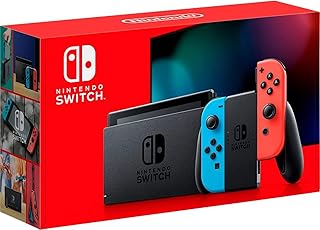
At around Rs 35,000 the Switch OLED is what I tell most people to buy. The 7-inch OLED screen is the single biggest reason. In handheld mode it is brighter, with deeper blacks and far better viewing angles than the older LCD Switch, which matters a lot in Indian living rooms where you are often gaming next to a window or under tubelights. Battery sits at around 4.5 to 9 hours depending on the game, and it docks to your TV with the included dock for couch play.
Pick the OLED if you want one console that handles both handheld and TV duty, and if you plan to play screen-heavy games like Tears of the Kingdom, Metroid Prime Remastered, or Splatoon 3 where the panel quality is doing real work. The Neon Red and Blue is the classic look, the White is the same hardware in a cleaner aesthetic. Hardware is identical, pick on colour alone.
At the other end of the power scale, our PS5 Pro in India guide covers the import vs wait question on Sony premium hardware.
Switch Lite, the budget handheld for travel and college hostels
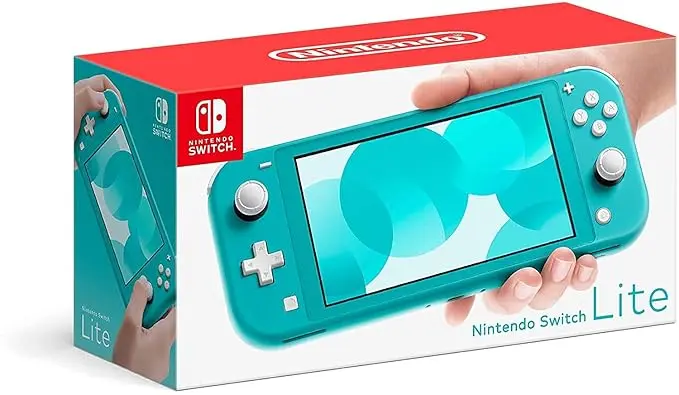
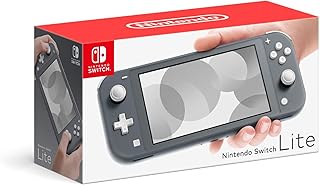
The Lite at around Rs 21,000 is the cheapest legitimate way into the Nintendo library. It is handheld-only, smaller, lighter, and has a built-in D-pad that the regular Joy-Con does not. The catch is that it cannot dock to a TV, ever. It also cannot play a small number of Joy-Con motion-required games like 1-2 Switch or Ring Fit Adventure without buying separate Joy-Con and a stand.
I keep my Lite in my travel bag because the form factor is the right size for an economy flight tray table and a hostel bunk. If you live in a shared hostel room, take long train rounds between Mumbai and Pune, or just want a second Switch for the bedroom, the Lite earns its price. If this will be your only console and you also want big-screen Mario Kart sessions with friends, skip it and buy the OLED.
Original Switch v2, fading from Indian stock
You will still see the 2019 refresh of the original Switch on Amazon and a few specialist sites for Rs 25,000 to Rs 29,000. It has the older 6.2-inch LCD screen, slightly better battery life than the launch Switch, and full dock support like the OLED. Nintendo has effectively wound down production after the Switch 2 launch, so stock is third-party and inconsistent.
The honest take in 2026 is that the original v2 makes sense only if you find it at a real discount, say below Rs 24,000, otherwise the OLED is worth the extra spend for the screen alone. The Lite, at Rs 21,000, undercuts it on price. The OLED, at Rs 35,000, outclasses it on screen. The v2 sits awkwardly in the middle.
Switch 2, the grey-market wildcard
The Switch 2 launched globally on 5 June 2025 and is the real successor: bigger 7.9-inch LCD with HDR10 and a 120Hz mode, magnetic Joy-Con 2, mouse-style controls, GameChat, and proper 4K output when docked. In India today it is grey-market only, sitting around Rs 49,999 to Rs 65,000 depending on seller and bundle. No Indian warranty, no Nintendo India service centre, and any hardware fault means a courier back to the seller or a trip to a repair shop in Singapore or Dubai.
Should you wait for an official India launch? My answer in May 2026 is yes for most people. Reports suggest Nintendo will enter India officially in early 2027 through Redington, and even if the first SKU is the original Switch at Rs 20,000, an official Switch 2 with warranty is likely to follow within a year or two. If you absolutely need cutting edge and you are fine importing, the Switch 2 is the most capable Nintendo console ever made. For everyone else, the Switch OLED today plus patience for the Switch 2 once it has India support is the calmer path.
Where to buy a Switch in India without getting burned
Because Nintendo has no official India arm, the line between a legitimate buy and a sketchy one matters a lot. Here is how the channels actually break down in 2026.
Amazon.in, sold and shipped by Amazon. Look for the “Sold by Cloudtail” or “Sold by Appario” successors, currently the Amazon-owned sellers, or “Ships from and sold by Amazon.in” on the product page. These come with Amazon’s return window and usually a 1-year seller warranty handled by a third-party India service centre. This is the lowest-risk online channel.
Amazon.in third-party sellers. Far cheaper sometimes, but the warranty is whatever the listing says, often nothing. If you go this route, screenshot the listing including warranty terms before paying and use Amazon’s A-to-Z guarantee if the unit arrives faulty.
Flipkart. Similar story, with Flipkart Assured listings being the safer choice. Switch stock on Flipkart is patchier than Amazon, and prices tend to be Rs 1,000 to Rs 3,000 higher on the OLED.
Reliance Digital and Croma. Both stock the Switch OLED in larger metro stores. Prices are closer to MRP, but you get a proper Indian invoice with a 1-year warranty handled through Reliance or Croma’s own service network. If something breaks, you can walk back into the store, which is a real comfort if this is your first Nintendo console.
NI Gaming, GamesTheShop, and other boutique e-tailers. These sites are run by Indian gaming retailers who specialise in imported consoles and games. NI Gaming in particular is reputable, openly handles grey-market Switch 2 pre-orders, and is honest about warranty being seller-handled rather than Nintendo-backed.
OLX, Facebook Marketplace, second-hand. Doable if you know what you are checking for. Bring a microSD card with a known good game image, test all four Joy-Con sticks and triggers, check the OLED panel for burn-in in the Home screen logo area, and verify the dock outputs to a TV before paying. Avoid units with hacked firmware unless you specifically want that, since they cannot use Nintendo Switch Online without bans.
Region locking and the eShop region question
This is the single most misunderstood part of buying a Switch in India, and it is worth slowing down for.
The Switch hardware itself is not region locked. A Switch bought in Japan plays cartridges bought in the US, plays cartridges bought in India through Amazon import, and runs digital games from any region. Your physical games are region-free, full stop.
The eShop is account region locked. India does not have its own Nintendo eShop, so when you create your Nintendo Account you pick a country, and that decides which eShop catalogue and pricing you see. You cannot easily change this later without creating a new account. The two practical choices for Indian players are a US eShop account or a Japan eShop account.
US eShop. The biggest catalogue, every game launches here on day one, prices are in USD. Mario Kart 8 Deluxe is $59.99, Tears of the Kingdom is $69.99. Paying with an Indian credit card sometimes works, sometimes does not. The reliable workaround is to buy US Nintendo eShop gift cards from sites like SEAGM, Eneba or Kinguin, redeem them on the account, and pay in INR via UPI or card.
Japan eShop. Often cheaper on first-party Nintendo games once you account for the yen. Mario Kart 8 Deluxe is around ¥6,578, which works out roughly Rs 3,800 versus the US Rs 5,000 equivalent at current rates. Catalogue is large and most big titles have English language options built in, but a small number of Japan-only releases never get English subs. Pay via Japanese eShop gift cards from the same resellers.
My usual recommendation for someone setting up a Switch from scratch in India is to make the primary account US for catalogue breadth, then create a secondary Japan account on the same console for cheap first-party purchases. The Switch lets you switch accounts at the eShop and Home screen, so this works cleanly.
The games that justify owning a Switch in India
The Switch’s value proposition is its first-party Nintendo library, which exists nowhere else. Here are the titles I would put on a new Indian Switch owner’s first shortlist, ordered by how often I keep going back to them.
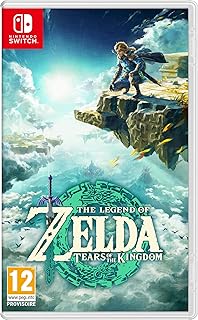
The Legend of Zelda: Tears of the Kingdom. The reason to own the OLED. 16GB install, around 80 hours for a focused main quest, and the build mechanic is one of the most original game systems of the last decade. If you only buy one Switch game, buy this one.
The Legend of Zelda: Breath of the Wild. Tears of the Kingdom’s predecessor and arguably the cleaner game design. Cheaper now, and it is the better starting point if you have never played a Zelda. If you finish it you will want Tears of the Kingdom next.
Mario Kart 8 Deluxe. The single best couch multiplayer game on the system. 48 base tracks, 48 more in the DLC Booster Course Pass, and the kind of game that gets cousins and parents off the couch at family functions. Online play from India to US servers runs at around 180 to 250 ms ping, which is playable for casual races but rough for serious time trials. Local 4-player split-screen on the OLED dock is where it really shines.
Super Mario Odyssey. Still the most charming 3D Mario in years. Around 12 to 15 hours for the main story, far longer if you chase moons. Plays beautifully in handheld mode on the OLED.
Super Smash Bros. Ultimate. The definitive party fighting game with 89 characters. Locally with friends it is one of the great couch games. Online from India is harder, lag is real and you will mostly want to play with friends on local wireless or LAN.
Animal Crossing: New Horizons. A slow-paced island life game that runs alongside your real life. Excellent during long Indian power cuts or monsoon weekends when you do not want to leave the bed.
Splatoon 3. Nintendo’s 4v4 paint shooter, distinctive art style, and one of the few first-party games with a healthy competitive scene. Online from India hits around 100 to 150 ms to JP servers and 200 ms to US, which is playable but a step behind locals.
Pokemon Scarlet and Violet. The first open world Pokemon. Performance is rough on the original Switch and Lite, OLED handles it better, and the DLC is worth the buy if you finish the base game.
Monster Hunter Rise. The best action-RPG on Switch, especially with the Sunbreak expansion. Built for handheld sessions and pairs well with the Pro Controller when docked.
Stardew Valley. Tiny install, infinite play time, runs perfectly on Lite, and the multiplayer with up to four friends is one of the best chill co-op experiences on any platform.
If you want to see how this Switch library compares against Sony’s PlayStation 5 lineup at Indian prices, that comparison is laid out in our PlayStation 5 price India 2026 breakdown.
Storage planning, microSD cards, and why 32GB internal is not enough
Both the original Switch and the OLED ship with paltry internal storage. The original Switch has 32GB, the OLED has 64GB, and the Switch 2 has 256GB which is the only one of the three you can live with stock. Roughly 6GB of that internal storage is taken by system files, so the usable share is smaller than the box claims.
The real numbers that matter:
- Tears of the Kingdom, around 16GB digital install
- Smash Bros Ultimate, around 16GB
- Pokemon Scarlet, around 7GB
- Mario Kart 8 Deluxe, around 7GB
- Mario Odyssey, around 6GB
- Animal Crossing, around 6GB
- Splatoon 3, around 6GB
- Stardew Valley, under 1GB
Three or four downloads in and a stock OLED is full. A microSD card is not optional, it is part of the cost of the console. The Switch and OLED both take a UHS-I microSD, the Switch 2 needs the faster microSD Express.
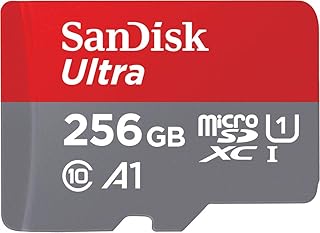
For the OLED and Lite, a 256GB Sandisk Ultra UHS-I card runs around Rs 5,199 on Amazon.in in May 2026, generic 256GB UHS-I A1 cards from other brands start at Rs 2,200, a 512GB sits around Rs 3,500 to Rs 6,000, and a 1TB tops out near Rs 8,000. 256GB is the sweet spot for most players. If you mostly buy physical cartridges and only keep two or three big digital games, even 128GB at Rs 1,000 is enough.
For the Switch 2, only microSD Express cards work for game installs, and those are much pricier, around Rs 4,500 for 256GB. Regular microSD still works for screenshots and old Switch 1 games but not for Switch 2 game data.
Accessories that actually matter, and the ones you can skip
The Switch accessory market is huge and most of it is filler. Here is the short list I would actually buy.
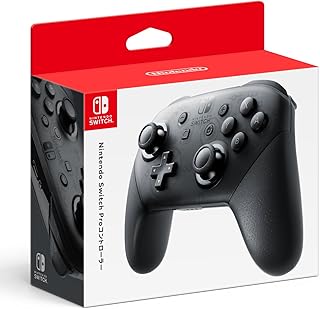
Nintendo Switch Pro Controller. If you plan to dock the Switch to a TV at all, the official Pro Controller at around Rs 7,799 on Amazon.in is the single best accessory you can buy for the system. Better D-pad, real triggers, far longer battery life than Joy-Con, no drift from heavy use. For fighting games, platformers, and any third-person action title, it transforms the experience.
Screen protector, tempered glass. The Switch OLED screen scratches if you slot it into the dock without protection, because the dock has a hard plastic lip. A Rs 300 to Rs 500 tempered glass protector solves this. Avoid plastic film, it picks up bubbles in Indian humidity within weeks.
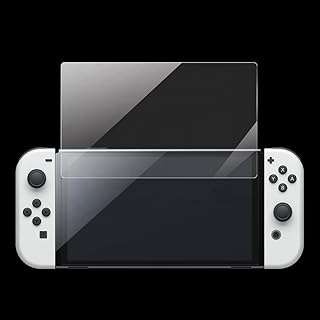
Porro Fino Tempered Glass Screen Protector for Switch OLED
Carry case with cartridge slots. Rs 700 to Rs 1,500 for a decent hardshell. The official Nintendo case is overpriced. Third-party cases from brands like tomtoc and JSAUX hold the console, two extra cartridges, a charger, and the Pro Controller in a side pouch.
USB-C charger 30W or higher. Any decent PD charger works, the Switch tops out at about 18W of draw, so a 30W or 45W phone charger is plenty. Cheap Indian-market chargers with PD support cost Rs 600 to Rs 1,000 and double up as your phone charger.
The accessories I would skip in 2026: third-party docks, since several brick the Switch firmware on bad luck; Joy-Con grips, since the regular grip works fine; and any all-in-one travel kit, since you end up using two items out of fifteen.
Joy-Con drift, the long-standing Switch problem
Joy-Con drift is real. After about 18 months of regular use, especially in humid coastal Indian cities like Mumbai or Chennai, the analog sticks start registering input on their own. The cause is dust and skin oil getting into the stick mechanism.
You have three options. First, send the Joy-Con to a third-party repair shop in your city, around Rs 800 to Rs 1,500 per stick. Second, learn to do it yourself, the parts cost Rs 200 from Amazon.in and the job takes about 20 minutes with a tri-wing screwdriver and patience. Third, buy a fresh pair of Joy-Con at around Rs 5,500.
The cheapest long-term answer is to mostly play docked with a Pro Controller, which never drifts, and keep the Joy-Con for occasional couch sessions. This is partly why the Pro Controller is the most-used accessory in my own setup.
Nintendo Switch Online, what it costs and who actually needs it
Nintendo Switch Online is the subscription you need for online multiplayer in games like Mario Kart, Splatoon, and Smash Bros. It also unlocks NES, SNES, Game Boy, and N64 retro libraries, and gives you cloud saves for most games.
Pricing in May 2026, paid through your eShop region:
- US individual, $19.99 per year, around Rs 1,700
- US family up to 8 accounts, $34.99 per year, around Rs 2,950
- Japan individual, ¥2,400 per year going up to ¥3,000 from July 2026, around Rs 1,650 then Rs 2,050
- Expansion Pack which adds N64, Sega Genesis, Game Boy Advance and major DLCs, $49.99 per year US, around Rs 4,250
For Indian buyers I usually recommend the US family plan via gift card, split across up to 8 accounts with friends or family. Per-person it works out to under Rs 400 a year, which is the cheapest legitimate way to get online play and the retro libraries.
If you only play single-player Zelda and Mario, you do not need NSO at all. Skip it until you actually want online Mario Kart or Splatoon.
Online play latency from India, what to expect
Honest expectations for online multiplayer from a typical Indian Jio Fiber or Airtel Xstream 200 Mbps connection in May 2026:
- Mario Kart 8 Deluxe, US servers, 180 to 250 ms, playable for casual races
- Mario Kart 8 Deluxe, Asia servers, 80 to 140 ms, the good experience
- Splatoon 3, Japan servers, 100 to 150 ms, fully competitive
- Splatoon 3, US servers, 200 ms plus, frustrating
- Smash Bros Ultimate, US, 200 ms plus, casual only
- Pokemon online battles, fine globally because the netcode is turn-based
If competitive online play is your main reason to buy a Switch, the JP eShop account routes you to closer Asian servers and gives the best Indian experience by a clear margin.
Switch versus PS5 versus PC, in one breath
If you are still picking between consoles, the short version: the Switch wins on first-party games and portability, the PS5 wins on graphics and AAA third-party titles, the PC wins on flexibility and Indian-tax-free Steam pricing. Many Indian gamers I know own a Switch plus a PC, since the libraries barely overlap.
If you are a student looking for one machine that handles college work, browsing, and gaming, our breakdown for gaming setups for college students in India covers that PC vs console call honestly. If you are thinking about whether to skip a console entirely and turn gaming into a side income, see how to make money gaming on a PC in India for what is actually realistic. And if you want to understand the upcoming AAA landscape, the GTA 6 India price and release date guide shows why a lot of buyers are sitting on their wallets right now.
Frequently asked questions
Is the Nintendo Switch officially sold in India in 2026?
No. Nintendo has no official India distribution as of May 2026. All Switch units in India come through grey-market import, Amazon third-party sellers, Reliance Digital and Croma store imports, or specialist Indian e-tailers. An official Nintendo India launch through Redington is reported for early 2027, likely starting with the original Switch at around Rs 20,000.
Should I wait for the Switch 2 to launch officially in India?
Probably yes for most buyers. The Switch 2 is grey-market only in India and costs Rs 49,999 to Rs 65,000 with no India warranty. An official India launch with warranty support is the smarter buy if you can wait. If you cannot wait, the Switch OLED at Rs 35,000 is a strong console today with a huge backlog of games.
Is the Nintendo Switch region locked?
No, the hardware is not region locked and physical cartridges work globally. The eShop is account region locked, so the country you pick when creating your Nintendo Account decides the eShop catalogue and pricing you see. Indian players typically use a US or Japan eShop account funded by gift cards.
Does the Switch Lite connect to a TV?
No, the Lite is handheld only and cannot dock to a TV. If TV play matters to you at all, buy the Switch OLED instead.
Is the OLED screen worth the price difference over the original Switch?
Yes for handheld players. The 7-inch OLED is brighter, more colourful, and easier to read in daylight than the older LCD. If you play mostly docked on a TV, the OLED upgrade is less obvious and you might save money on the original v2 if you find one cheap.
What microSD card should I buy for the Switch OLED?
A 256GB UHS-I A1 card from Sandisk Ultra, around Rs 5,199 on Amazon.in, or a Samsung or generic equivalent from Rs 2,200. That covers four or five large games comfortably. Skip cheaper no-name brands, they corrupt over time and you will lose save data.
Can I play Switch games on the Switch 2?
Yes, the Switch 2 plays almost all original Switch cartridges and digital games with full backward compatibility. A handful of accessory-heavy titles like Ring Fit Adventure are not fully supported, but the vast majority of the library carries over and many games get visual enhancements on Switch 2.
How much does Nintendo Switch Online cost from India?
Around Rs 1,700 per year for the US individual plan, Rs 2,950 for the US family plan up to 8 accounts, paid via US eShop gift cards from sites like SEAGM or Eneba. The family plan split with friends is the cheapest legitimate way to get online play.
The verdict
If you want one console that does both handheld and TV, the Switch OLED at around Rs 35,000 from Amazon.in or Reliance Digital is the right buy in May 2026. Add a Pro Controller, a 256GB microSD, a Rs 440 tempered glass screen protector, and either a US or JP eShop account funded by gift cards. Total ticket including the OLED, accessories, and your first three games sits around Rs 50,000 to Rs 55,000.
If your budget is hard-capped and you mostly play on the move, the Switch Lite at Rs 21,000 is the honest pick. Pair it with a 128GB microSD and Stardew Valley, Mario Odyssey, and Mario Kart on cartridges. You will spend under Rs 30,000 all-in and still get hundreds of hours of play.
If you have the budget and patience to wait, the smart 2026 move is to buy a used or new Switch OLED now for the existing library, then upgrade to an officially-warrantied Switch 2 when Nintendo India formally launches it. Backward compatibility means your games carry forward, and you avoid the grey-market warranty risk on the most expensive Nintendo console ever made.
Whichever you pick, the Switch library is unmatched. Nothing else gives you Zelda, Mario, Splatoon, and Smash on the same machine. For Indian gamers willing to deal with the eShop region setup, it remains the most-recommended secondary console in the country, and a strong primary console for players who care more about games than graphics. For where the Switch sits against the PS5 and Xbox Series X in 2026, our best gaming console India 2026 ranking has the full head-to-head.