

Updated October 2026 with current Indian retail prices.
Best overall: Sapphire Pulse RX 9060 XT 16GB at ₹50,959 (the only good 16GB card under 60k, best for 1440p). Best value: Gigabyte RX 9060 XT 8GB at ₹37,509. Best NVIDIA: MSI RTX 5060 Ti 8GB at ₹43,649 (for DLSS 4 and ray tracing). The under-60k story in India is the AMD RX 9060 XT.
Key facts
- 16GB is the smart buy at this budget. 8GB cards are fine for 1080p but stutter at 1440p ultra with ray tracing in 2026 games. The RX 9060 XT 16GB (around ₹51,000) is the only genuinely good 16GB card that fits under 60k, so it is the standout.
- The RX 9060 XT wins value here. AMD gives you 16GB and strong raster performance for less money. No NVIDIA 16GB card fits under 60k, the RTX 5060 Ti 16GB starts around ₹67,000.
- Buy NVIDIA for DLSS 4, ray tracing and creator apps. The RTX 5060 Ti 8GB (₹43,649) has better upscaling (DLSS 4 with Multi Frame Generation) and ray tracing, but only 8GB, so it is a 1080p and light-1440p card.
- Check your power supply. An RTX 5060 Ti wants a 650W PSU; the RX 9060 XT and RTX 5060 are happy on 550W. All use standard 8-pin connectors, not the new 12-pin.
- Watch out for traps. The Intel Arc B580 is price-broken in India (around ₹67,000, double a fair price), and the old RTX 4060 Ti costs more than the faster RTX 5060 Ti, so skip both.
- Prefer Amazon-fulfilled listings. The value and 1440p picks here are sold by Amazon’s own authorised retail. Some cards are only listed by third-party sellers (still genuine, brand warranty), which we flag on each card.
The best graphics card under ₹60,000 in India in 2026 is the Sapphire Pulse RX 9060 XT 16GB at around ₹50,959, because 16GB of VRAM is what actually matters at this budget and it is the only good 16GB card that fits. That is the heart of the decision here: 8GB cards are fine for 1080p but already struggle at 1440p ultra in new games, and the RX 9060 XT is the one card that gives you 16GB without going over budget. This guide ranks the genuine graphics cards in stock under ₹60,000 on Amazon.in right now, both NVIDIA and AMD, and answers the two questions every buyer has: 8GB or 16GB, and NVIDIA or AMD. We also flag the traps, the cards that look like they fit this budget but do not, or that cost more than a faster option. Every price and seller was checked live in July 2026. For cheaper cards, see our separate best graphics card under 40000 guide.
 🎁 GiveawayFREE
Quick comparison table
Prices & sellers verified on Amazon.in, July 2026. GPU prices move week to week, always check the live link before buying.
| Pick | Card | Price | VRAM | Best for | Buy |
|---|---|---|---|---|---|
| Best Overall | Sapphire RX 9060 XT 16GB | ₹50,959 | 16GB GDDR6 | 1440p gaming | Amazon |
| Best Value | Gigabyte RX 9060 XT 8GB | ₹37,509 | 8GB GDDR6 | 1080p value | Amazon |
| Best NVIDIA | MSI RTX 5060 Ti 8GB | ₹43,649 | 8GB GDDR7 | DLSS 4 + RT | Amazon |
| 16GB Alt | ASUS Dual RX 9060 XT 16GB | ₹51,500 | 16GB GDDR6 | 1440p backup | Amazon |
| Cheapest NVIDIA | Gigabyte RTX 5060 8GB | ₹38,100 | 8GB GDDR7 | 1080p + DLSS | Amazon |
Best graphics card under 60000: Sapphire Pulse RX 9060 XT 16GB
The Sapphire Pulse RX 9060 XT 16GB is the standout card under ₹60,000 at ₹50,959, and it comes down to that 16GB of VRAM. At this budget in 2026, VRAM is the whole decision: 8GB cards already stutter at 1440p ultra with ray tracing in demanding new games, and 16GB fixes that. This is the only genuinely good 16GB card that fits under 60k, because NVIDIA’s 16GB option overshoots to around ₹67,000. Built on AMD’s current RDNA 4 architecture, it handles 1440p high comfortably and 1080p with ease, and it is sold by Clicktech Retail, Amazon’s own authorised arm, so buying is clean. If you want the most future-proof card your ₹60,000 can buy, this is it.

Sapphire Pulse RX 9060 XT Gaming OC 16GB
Price checked July 2026Amazon fulfilled16GB for 1440p
Best value: Gigabyte RX 9060 XT 8GB
The Gigabyte RX 9060 XT 8GB is the value pick at ₹37,509, the cheapest strong card here and, importantly, sold by Amazon’s authorised Clicktech Retail. It is a superb 1080p ultra card on the current RDNA 4 architecture, and rupee for rupee it delivers more raw raster performance than the 8GB NVIDIA cards near this price. The only limit is the 8GB of VRAM, which is fine at 1080p but tight for 1440p ultra in the newest games. If your monitor is 1080p and you want the most performance for the least money from a clean seller, buy this. If you play at 1440p, stretch to the 16GB version above, and for even cheaper options see our best graphics card under 40000 guide.
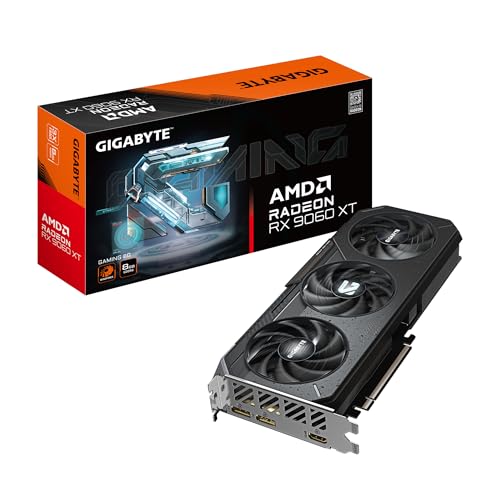
Gigabyte Radeon RX 9060 XT Gaming 8G
Price checked July 2026Amazon fulfilledBest raster per rupee
Best NVIDIA option: MSI RTX 5060 Ti 8GB
The MSI RTX 5060 Ti 8GB at ₹43,649 is the NVIDIA pick, and you buy it for the software as much as the hardware. It has DLSS 4 with Multi Frame Generation, which is ahead of AMD’s FSR on both image quality and the number of supported games, plus stronger ray tracing and better support in creator and AI apps, all on fast GDDR7 memory. The catch is the 8GB VRAM, which limits it at 1440p ultra just like the other 8GB cards. Note that this listing is sold by a third-party seller (onedealz), which is legitimate and carries the brand warranty but is not Amazon-fulfilled, so check the seller rating before buying. Choose it over the RX 9060 XT if DLSS 4, ray tracing or content creation matter to you.

MSI GeForce RTX 5060 Ti 8G Shadow 2X OC Plus
Price checked July 2026DLSS 4 + ray tracing3rd-party seller
16GB alternative: ASUS Dual RX 9060 XT 16GB
The ASUS Dual RX 9060 XT 16GB at ₹51,500 is the backup 16GB pick. It is the same RDNA 4 GPU with the same 16GB of VRAM as our top pick, in ASUS’s well-regarded Dual cooler, so it delivers the same 1440p-capable experience. The reasons it is the alternative rather than the main pick: it is a touch more expensive, it is sold by a third-party seller rather than Amazon’s authorised arm, and stock is thin (often just one unit). Buy this if the Sapphire Pulse is unavailable and you want a 16GB RX 9060 XT now, otherwise start with the Sapphire above.
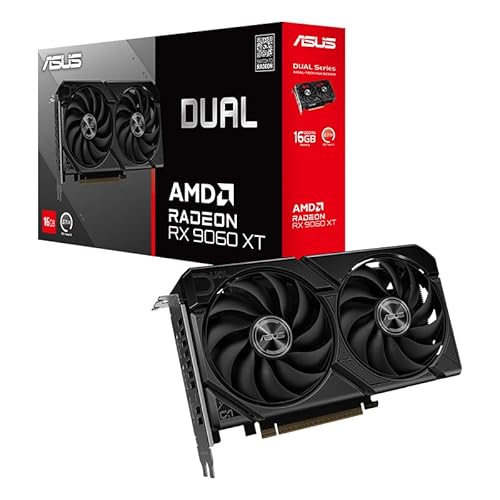
ASUS Dual Radeon RX 9060 XT 16GB
Price checked July 202616GB for 1440pLimited stock
Cheapest NVIDIA with DLSS 4: Gigabyte RTX 5060 8GB
The Gigabyte RTX 5060 8GB at ₹38,100 is the cheapest way into NVIDIA’s current generation with DLSS 4. It is a very good 1080p card with the latest GDDR7 memory and access to DLSS 4 upscaling, a step below the RTX 5060 Ti in raw performance but noticeably cheaper. Like the other NVIDIA card here it has 8GB of VRAM, so it is a 1080p machine rather than a 1440p one, and it is sold by a third-party seller (onedealz), genuine with brand warranty but not Amazon-fulfilled. Buy it if you want NVIDIA features at the lowest price in this guide. If you can go lower still, our best graphics card under 40000 guide covers cheaper options.

Gigabyte GeForce RTX 5060 WINDFORCE MAX OC 8G
Price checked July 2026Cheapest DLSS 4 card3rd-party seller
8GB or 16GB VRAM? The decision that matters most
This is the question that decides your purchase at this budget, and most guides skip it. VRAM is the memory your graphics card uses to hold game textures, and running out of it causes stutter and forces the game to drop texture quality. In 2026, 8GB is enough for 1080p at high or ultra in almost everything, so if you have a 1080p monitor, an 8GB card like the RX 9060 XT 8GB or RTX 5060 Ti is a great buy. But at 1440p with ultra textures and ray tracing, 8GB fills up, and in some demanding new games an 8GB card can run over 20 percent slower with worse stutter than the same card with 16GB. So if you game at 1440p, or you want a card that stays comfortable for the next few years, buy 16GB. At this budget that means the RX 9060 XT 16GB, because it is the only good 16GB card under ₹60,000. The short version: 1080p, 8GB is fine and cheaper; 1440p or future-proofing, get 16GB.
NVIDIA or AMD under 60000: the real value math
Both brands are worth buying in 2026, and the choice is about what you value. AMD (the RX 9060 XT) wins on raw performance per rupee and on VRAM, you get 16GB and strong rasterised gaming for less money, which is why it is our top pick at this budget. NVIDIA (the RTX 5060 Ti and 5060) wins on software: DLSS 4 with Multi Frame Generation is ahead of the AMD FSR 4 on image quality and supports far more games (over 400 versus around 120), ray tracing is stronger, and NVIDIA cards are better supported in creator and AI applications. The old worry about bad AMD drivers is largely outdated now. So the honest math: for the best pure gaming value and 16GB at 1440p, buy the RX 9060 XT; if you specifically want the best upscaling, ray tracing, or you also create content, pay a little more for the RTX 5060 Ti. There is no wrong answer, only the one that fits what you play.
What power supply do you need?
Do not overlook this, an underpowered PSU causes crashes and can damage components. For the RTX 5060 Ti, aim for a good quality 650W power supply. The RX 9060 XT and RTX 5060 are more efficient and run comfortably on a quality 550W unit. All of these cards use the standard 8-pin PCIe power connector, not the newer 12-pin (12VHPWR) connector, so they work with any normal modern PSU without adapters. If you are upgrading an older prebuilt or budget build with a cheap 450W supply, budget for a new PSU as part of the upgrade, a reputable 550 to 650W 80 Plus unit is the safe choice and is not expensive. Cheap no-name PSUs are the one place you should never save money in a build.
Which CPU should you pair it with?
A graphics card this capable needs a reasonable processor or it will be held back at 1080p (a bottleneck). The value sweet spot to pair with any card in this guide is a Ryzen 5 7500F or Ryzen 5 9600X on the AM5 platform, or an Intel Core i5-13600K, all of which comfortably feed these GPUs at 1080p and 1440p. On a tighter budget, a Ryzen 5 5600 on the older AM4 platform still pairs well and saves money. Below that, older or weaker CPUs will bottleneck these cards in CPU-heavy games, meaning you pay for GPU performance you cannot use. At 1440p the CPU matters less because the load shifts to the graphics card, so if you mostly play at 1440p you have more flexibility. For a full parts list, see our gaming PC build guides linked below.
Real gaming performance: what FPS to expect
Cards at this budget are strong 1080p performers and capable 1440p ones. At 1080p, all of them run competitive esports titles like Valorant, CS2 and BGMI at well over 150 FPS, and demanding AAA games at ultra settings comfortably above 60 FPS, often 80 to 120 with upscaling. At 1440p, they handle high settings above 60 FPS in most games, and this is exactly where the 16GB RX 9060 XT pulls ahead of the 8GB cards, holding steady where an 8GB card starts to stutter as VRAM fills. Turn on DLSS 4 (NVIDIA) or FSR (AMD) and you get a further boost, which keeps even demanding 1440p games smooth. In short, buy any of these for excellent 1080p gaming, and buy the 16GB RX 9060 XT if 1440p is your target.
Graphics cards to avoid under 60000
Three cards look like they belong in this budget but should be skipped right now. The RTX 5060 Ti 16GB is the one people most want here, but it does not fit, the cheapest listings start around ₹67,000 to ₹69,000, roughly ₹8,000 over budget, so if you need 16GB the RX 9060 XT 16GB is the card. The Intel Arc B580 12GB is a great value card in the US, but in India it is price-broken, the only in-stock listing is around ₹67,000, close to double a fair price, so ignore it here for now. And the older RTX 4060 Ti 8GB is still on sale around ₹46,000 to ₹49,000, which is actually more than the newer and faster RTX 5060 Ti 8GB, so there is no reason to buy the previous generation. Stick to the five picks above and you avoid all three traps.
How we chose these graphics cards
We searched Amazon.in from an Indian address and confirmed on each product page the exact GPU model, VRAM and current price, because this category is full of traps: mislabelled tiers (a plain RTX 5060 listed under RTX 5060 Ti searches), old cards bleeding into results, and inflated strikethrough MRPs. We only included genuine desktop graphics cards actually in stock under ₹60,000, preferred listings sold by Amazon directly through its authorised retail arm, and clearly flagged the ones sold by third-party sellers. We deliberately kept the cheaper sub-₹40,000 cards as context and cross-linked our separate under 40000 guide, so this article stays focused on the cards that make sense specifically at the ₹40,000 to ₹60,000 level. Prices and stock were verified in July 2026 and move quickly, so always check the live listing. We did not lab-test every card, picks are based on verified listings, current-generation architecture, VRAM, seller trust and known performance of each GPU.
Affiliate disclosure: links to Amazon are affiliate links. If you buy through them, GamingNation may earn a small commission at no extra cost to you. It does not affect our picks or the order above.
Decision time
Decide your VRAM and brand first, then match the card to your resolution and PSU
Frequently Asked Questions
Which is the best graphics card under 60000 in India in 2026?
The Sapphire Pulse RX 9060 XT 16GB (around ₹50,959) is the best overall, because 16GB of VRAM is what matters at this budget and it is the only good 16GB card that fits under 60k. The Gigabyte RX 9060 XT 8GB (₹37,509) is the best value for 1080p, and the MSI RTX 5060 Ti 8GB (₹43,649) is the best NVIDIA pick for DLSS 4 and ray tracing.
Is 8GB VRAM enough for gaming in 2026?
At 1080p, yes, 8GB handles high and ultra settings in almost every game. At 1440p with ultra textures and ray tracing, 8GB can fill up and cause stutter, running over 20 percent slower than a 16GB card in some new titles. So 8GB is fine for a 1080p monitor, but for 1440p or future-proofing, buy a 16GB card like the RX 9060 XT 16GB.
RTX 5060 Ti or RX 9060 XT, which is better?
For value and 1440p, the RX 9060 XT, especially the 16GB version, which gives more VRAM and raster performance per rupee and is the only 16GB card under 60k. For DLSS 4 upscaling, ray tracing and creator or AI apps, the RTX 5060 Ti. Both are good, so choose AMD for pure gaming value and NVIDIA for software features.
Can the RX 9060 XT and RTX 5060 Ti do 1440p gaming?
Yes. Both handle 1440p high above 60 FPS in most games, especially with upscaling (FSR on AMD, DLSS 4 on NVIDIA) enabled. The difference is VRAM: the 16GB RX 9060 XT stays comfortable at 1440p ultra, while the 8GB cards can stutter in the most demanding titles as VRAM fills. For a dedicated 1440p card at this budget, the 16GB RX 9060 XT is the pick.
What PSU do I need for these graphics cards?
For the RTX 5060 Ti, use a good quality 650W power supply. The RX 9060 XT and RTX 5060 are more efficient and run fine on a quality 550W unit. All of these cards use the standard 8-pin PCIe connector, not the newer 12-pin, so no adapters are needed. Never pair them with a cheap no-name PSU, buy a reputable 80 Plus unit.
Is DLSS 4 better than FSR 4?
Yes, on both image quality and game support. NVIDIA’s DLSS 4 with Multi Frame Generation works in over 400 games and generally looks cleaner, while AMD’s FSR 4 is now machine-learning based and much improved but supports fewer games, around 120. If upscaling quality is a priority, that favours the NVIDIA cards. For pure rasterised performance and VRAM, AMD still wins on value.
Should I buy the RTX 5060 Ti 16GB or the RX 9060 XT 16GB?
The RX 9060 XT 16GB, if your budget is 60k, because the RTX 5060 Ti 16GB does not fit, its cheapest listings start around ₹67,000. The RX 9060 XT 16GB gives you the same 16GB of VRAM and strong 1440p performance while staying under budget. Only consider the RTX 5060 Ti 16GB if you can stretch the extra ₹8,000 or so and specifically want DLSS 4 and ray tracing.
Which CPU should I pair with a graphics card at this budget?
A Ryzen 5 7500F or 9600X, or an Intel Core i5-13600K, are the value sweet spot and feed these GPUs well at 1080p and 1440p. On a tighter budget, a Ryzen 5 5600 on AM4 still pairs nicely. Avoid pairing these cards with older or very weak CPUs, which bottleneck them at 1080p so you cannot use all the GPU performance you paid for.