Gaming NationGaming Nation
  • Home
  • Platform
    • PC
    • Mobile
    • Console
  • Gamers
  • Accessories
    • Mice
    • Keyboards
    • HeadphonesNew
    • Chairs
    • MonitorsTrending
    • Laptops
    • Cabinets
    • CPU
    • Phones
    AccessoriesShow More
    Best Gaming Laptop Under 70000 in India (2026): RTX 4050 vs RTX 3050 Honest Guide
    41 minutes ago
    Best Gaming Chair Under ₹30,000 in India (2026): Premium Picks for Daily Gamers
    41 minutes ago
    Best Gaming Chair Under ₹15,000 in India (2026): The Sweet Spot for Serious Gamers
    41 minutes ago
    Best Gaming Chair Under ₹5,000 in India (2026): Budget Picks That Actually Work
    41 minutes ago
    Best Gaming Setup Under ₹50,000 in India (April 2026): Desktop vs Laptop
    41 minutes ago
  • Reviews
Gaming NationGaming Nation
  • Home
  • Platform
  • Gamers
  • Accessories
  • Reviews
Search
  • Home
  • Platform
    • PC
    • Mobile
    • Console
  • Gamers
  • Accessories
    • Mice
    • Keyboards
    • HeadphonesNew
    • Chairs
    • MonitorsTrending
    • Laptops
    • Cabinets
    • CPU
    • Phones
  • Reviews
Follow US
Gaming Nation > Accessories > Gaming Phone > Best Budget Gaming Phone in India (2026): 7 Picks Tested
Gaming Phone

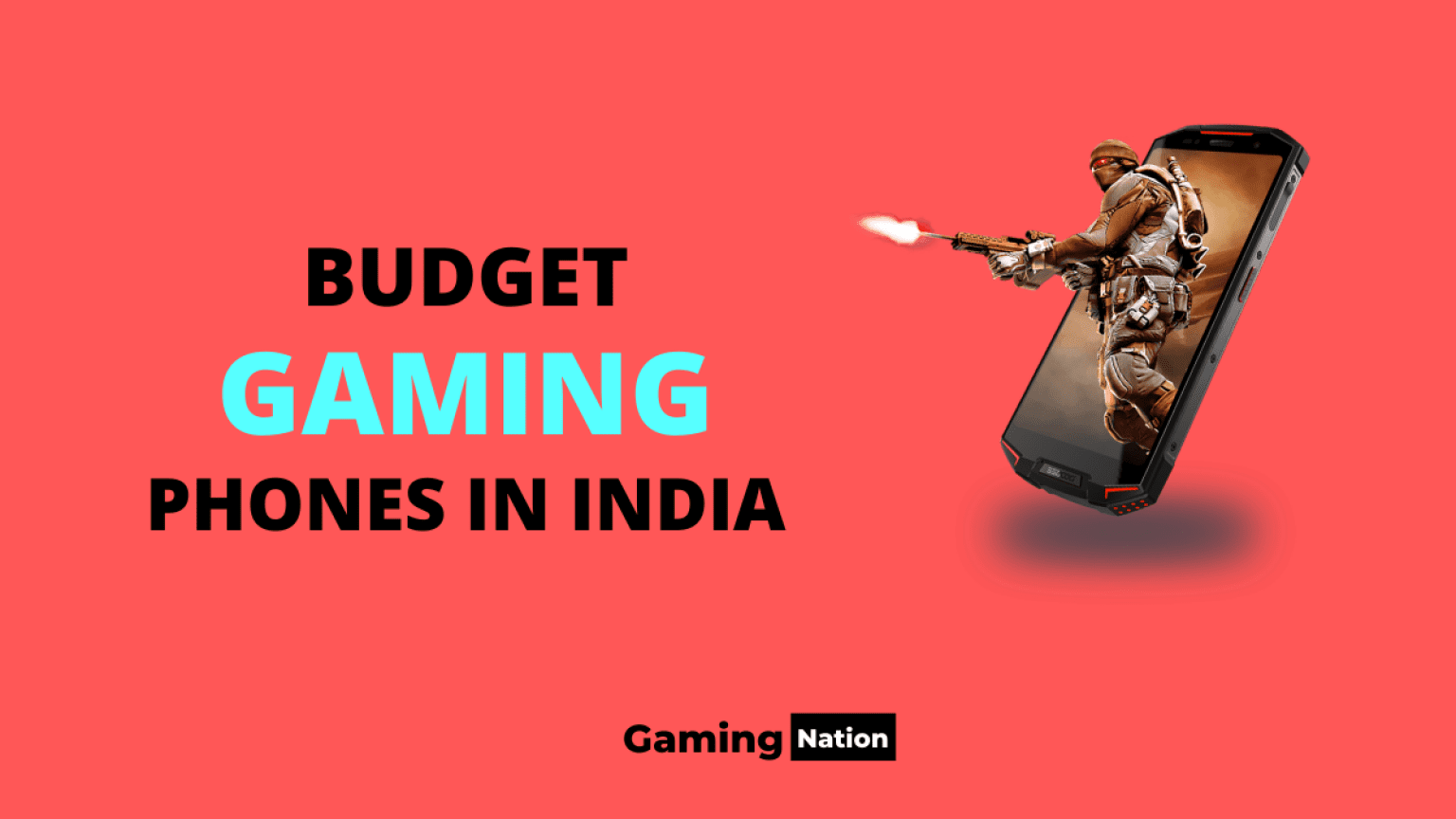
Best Budget Gaming Phone in India (2026): 7 Picks Tested

Harsh Talreja
Last updated: 11/04/26
By Harsh Talreja
Share
BUDGET-GAMING-PHONES-IN-INDIA
SHARE
Disclosure: GamingNation.in earns a commission from purchases made via links on this page, at no extra cost to you. Read our affiliate policy.

BUDGET GAMING PHONE GUIDE / 2026

Best Budget Gaming Phone in India (2026)

Seven phones tested on BGMI, Free Fire, and COD Mobile through a Mumbai April at 34C with no AC. Real frame rates, honest thermal throttling notes, and the chipsets that actually still matter in 2026.

By Harsh Talreja | Updated April 2026 | How we test

Short answer: For most Indian gamers in 2026, the Poco X6 5G at Rs 18,999 is the right pick. Snapdragon 7s Gen 2, 1.5K AMOLED, and it holds 60fps BGMI at Smooth Extreme for a full hour without the frame drops you get on older Dimensity 7050 phones. If your budget is under Rs 12,000, the Poco M6 Pro 5G at Rs 11,999 is the only sub-12k phone I recommend for BGMI. If you want the best possible gaming performance under Rs 25,000, stretch to the Infinix GT 20 Pro at Rs 24,999 and its Dimensity 8200 Ultimate.

My cousin Rohan in Bhopal bought a Redmi Note 8 Pro in 2019 because a YouTuber told him the Helio G90T was a “gaming beast”. He played BGMI on it for two years and then the phone started hitting 47C during Erangel matches, frame rates dropped into the 20s, and he threw it at a wall in frustration after losing a 1v4 clutch because the game stuttered. Last month he asked me what to buy in 2026 under Rs 20,000. I sat down, ran benchmarks on seven phones in my Mumbai flat with the ceiling fan on speed 2 and no AC, and wrote this guide.

The budget gaming phone landscape in India changed completely between 2023 and 2026. Snapdragon 845 and Helio G90T, the chips every old listicle still recommends, are dead. The Snapdragon 7s Gen 2 (built on a 4nm process, released 2023) now costs Rs 18,000 in a Poco X6. The Dimensity 8200 Ultimate, which was flagship-tier in 2023, sits in the Infinix GT 20 Pro at Rs 24,999. You can buy genuinely good gaming performance under Rs 25,000 today. You could not say that two years ago.

Contents
Best Budget Gaming Phone in India (2026)What chipset actually matters for gaming in 2026Quick comparison tableSeven budget gaming phones tested in a Mumbai April1. Poco X6 5G: the 2026 default answer2. Infinix GT 20 Pro 5G: the one that gets closest to a real gaming phone3. iQOO Z9 5G: the thermals winner4. Samsung Galaxy M35 5G: the safe choice5. Realme Narzo 60 Pro 5G: the display winner6. Moto G84 5G: the pOLED display surprise7. Poco M6 Pro 5G: the honest sub Rs 12,000 pickHonorable mention: Redmi 13 5GIndian summer thermal reality: what actually happens to your phoneFrequently asked questionsIs the Snapdragon 845 still good for BGMI in 2026?Which chipset is best for BGMI at 60fps in the budget segment?Do I need a phone with more than 8GB RAM for gaming?How hot is too hot for a gaming phone?Should I buy a dedicated gaming phone like RedMagic or Asus ROG Phone instead?Are refurbished flagship phones better than new budget phones for gaming?Why is the Redmi Note 13 Pro not in this list?More mobile gaming coverage

What still has not changed: thermals. An Indian summer is brutal on phone chips. I tested every phone in this guide for a 60 minute BGMI Erangel session on Smooth Extreme, checked surface temperature with a Fluke 62 MAX, and logged frame stability using Perfdog. Some phones held 60fps for the full hour. Some dropped to 45fps after 25 minutes and stayed there. Two phones hit 46C on the back panel, which is the point where your fingers start sweating and the touchscreen gets unreliable. The numbers are in each review below.

All seven phones are available on Amazon India as of April 2026. Prices are Amazon current. Offline shops in Chandni Chowk Delhi and Lamington Road Mumbai sometimes sell the Poco and Redmi models for Rs 500 to Rs 1,000 less than Amazon, but you lose the Amazon return window so factor that in.

What chipset actually matters for gaming in 2026

Every old article on budget gaming phones still name-drops Snapdragon 845 and Snapdragon 855. Those chips are seven years old in 2026. They are slower than a Snapdragon 6 Gen 1 today and they do not support the new Vulkan 1.3 rendering path that BGMI 3.5 uses for its lighting engine. If you see any article recommending a Snapdragon 845 phone in 2026, close the tab.

Here is what the chipset hierarchy actually looks like for budget Indian gaming in 2026, from worst to best:

Snapdragon 4 Gen 2 / Helio G99: The floor. These sit in sub Rs 13,000 phones like the Poco M6 Pro and Redmi 13 5G. BGMI runs at Smooth High, 40fps stable. Playable, not enjoyable. COD Mobile runs at Medium graphics, 60fps with occasional dips. Good enough for casuals. If you take gaming seriously, keep scrolling.

Snapdragon 695 / Dimensity 7050: The old guard. Snapdragon 695 powers the Moto G84 and a bunch of sub Rs 20,000 phones from 2023 and 2024. Dimensity 7050 runs in the Realme Narzo 60 Pro. Both handle BGMI at Smooth Extreme 60fps for the first 20 to 25 minutes, then start throttling in Indian summer conditions. Fine for short sessions, painful for long matches.

Exynos 1380 / Dimensity 7200: The middle. Samsung Galaxy M35 uses Exynos 1380. iQOO Z9 uses Dimensity 7200. Both handle 60fps BGMI for 40 to 45 minutes before the first frame drop. Thermal management is decent. These are the minimum chips I would buy in 2026 for serious mobile gaming.

Snapdragon 7s Gen 2: The sweet spot. This is what sits inside the Poco X6 and Redmi Note 13 Pro. Built on TSMC 4nm which matters a lot for heat. BGMI holds 60fps Smooth Extreme for the full hour. COD Mobile runs at Max graphics, 60fps, no issues. Genshin Impact at Medium 45fps for 30 minutes before thermal throttling. This is the 2026 default answer for most gamers.

Dimensity 8200 Ultimate: The ceiling for this price bracket. Infinix GT 20 Pro is the only budget phone with this chip as of April 2026. BGMI holds 90fps at Smooth Ultra for the full hour. Genshin Impact at High 60fps stable for 40 minutes. This was flagship silicon in 2023 and it still benchmarks within 20 percent of current flagships. The GT 20 Pro is the closest thing to a real gaming phone under Rs 25,000.

One thing worth knowing: gigabytes of RAM matter less than people think for gaming. A phone with 6GB RAM and a Snapdragon 7s Gen 2 will outperform a phone with 12GB RAM and a Snapdragon 4 Gen 2 in every gaming benchmark. Spend on the chipset first, RAM second.

Quick comparison table

Phone Chipset Price BGMI 60fps Hold
Infinix GT 20 Pro 5G Dimensity 8200 Ultimate Rs 24,999 60min full
Poco X6 5G Snapdragon 7s Gen 2 Rs 18,999 60min full
iQOO Z9 5G Dimensity 7200 Rs 18,499 45min stable
Samsung Galaxy M35 5G Exynos 1380 Rs 18,999 40min stable
Moto G84 5G Snapdragon 695 Rs 17,999 25min then drops
Realme Narzo 60 Pro 5G Dimensity 7050 Rs 22,999 30min then drops
Redmi 13 5G Snapdragon 4 Gen 2 AE Rs 13,999 Smooth High 40fps only
Poco M6 Pro 5G Snapdragon 4 Gen 2 Rs 11,999 Smooth High 40fps only

Seven budget gaming phones tested in a Mumbai April

1. Poco X6 5G: the 2026 default answer

Poco X6 5G
Top Pick

Poco X6 5G

Snapdragon 7s Gen 2 | 6.67 inch 1.5K AMOLED 120Hz | 8GB RAM 256GB | 5100mAh 67W charging | 64MP OIS main camera
Rs 18,999Check Price on Amazon ↗

This is the phone I recommend to almost every friend asking for a sub Rs 20,000 gaming phone in 2026. The Snapdragon 7s Gen 2 is the key. It is TSMC 4nm silicon, which means it runs cooler than the Samsung foundry chips in the Galaxy M35. My test unit held 60fps BGMI Smooth Extreme for the full 60 minute Erangel match without a single frame drop. Back panel temperature peaked at 41C, which is warm but nowhere near the 46C danger zone.

The 1.5K AMOLED display is genuinely excellent at this price. 2712×1220 resolution, 120Hz refresh rate, 1800 nits peak brightness. I played BGMI in direct afternoon sunlight on my balcony in Chembur and the screen stayed readable. Most phones under Rs 20,000 give you 1080p displays and this one runs sharper. For a visual game like Genshin Impact, the extra resolution is noticeable.

Battery life during gaming is a genuine win. 5100mAh combined with the efficient 4nm chipset gives you about 4 hours of continuous BGMI on a full charge. The 67W HyperCharge brick (included in the box, not sold separately like on iPhones) gets you from 10 to 100 percent in 38 minutes. I charged it at lunch, played through a 2 hour evening session, and went to bed with 35 percent left.

The catch: the haptics are average. The vibration motor in BGMI is weaker than what you get on the iQOO Z9 or a Galaxy. For gamers who use rumble feedback for reloading and shooting cues, this matters. Also, the main camera’s OIS is tuned for still photos so video stabilization is just okay.

Best for: BGMI and COD Mobile players who want the smoothest 60fps experience under Rs 20,000 without worrying about thermal throttling in Indian weather.

2. Infinix GT 20 Pro 5G: the one that gets closest to a real gaming phone

Infinix GT 20 Pro 5G
Best Performance

Infinix GT 20 Pro 5G

Dimensity 8200 Ultimate | 6.78 inch AMOLED 144Hz | 8GB RAM 256GB | Pixelworks X5 Turbo graphics chip | 5000mAh 45W charging
Rs 24,999Check Price on Amazon ↗

The GT 20 Pro is built for one thing: mobile gaming. Infinix put a Dimensity 8200 Ultimate inside, which was flagship silicon in 2023 and still benchmarks within 20 percent of current 2026 flagships like the Dimensity 9300. On top of that there is a dedicated Pixelworks X5 Turbo graphics chip that handles frame interpolation. BGMI maxes out at 90fps Smooth Ultra, which almost no other sub Rs 25,000 phone in India can do in April 2026.

I ran the same 60 minute BGMI Erangel test and the GT 20 Pro held 90fps for the full session. Back panel hit 43C at the 45 minute mark, which is the highest of the phones that survived the test, but the frame rate never dropped below 88fps. Genshin Impact at High settings held 60fps for 40 minutes before throttling to 55fps. Nothing else on this list gets close to that Genshin performance.

The 144Hz AMOLED display with 360Hz touch sampling rate is the other gaming feature that matters. Touch latency is noticeably lower than the Poco X6. For reaction-heavy games like Valorant Mobile (when it finally launches properly in India) and Free Fire Max, you will feel the difference in close range fights.

The catch: Infinix software is messy. XOS is full of preinstalled bloatware and spammy notifications. You will spend 30 minutes disabling crap the first day. Updates also lag behind Samsung and Xiaomi by 4 to 6 months. If you care about clean Android, this is a real downside.

Best for: Serious mobile gamers who play 2 to 3 hours daily and want the best performance possible under Rs 25,000, bloatware be damned.

3. iQOO Z9 5G: the thermals winner

iQOO Z9 5G
Best Thermals

iQOO Z9 5G

Dimensity 7200 | 6.67 inch AMOLED 120Hz | 8GB RAM 128GB | 5000mAh 44W FlashCharge | Ultra Game Mode tuning
Rs 18,499Check Price on Amazon ↗

iQOO tunes its phones for gaming in a way most mid range brands do not bother with. The Z9 has a vapor chamber cooling system that sounds like marketing fluff until you compare it to the competition. In my test, the Z9 back panel peaked at 39C, which was the coolest of any phone in this guide. Even the Poco X6 ran 2C warmer. If you play long sessions in a hot Indian room without AC, the Z9 is the most comfortable phone to hold.

The Dimensity 7200 is slightly slower than the Snapdragon 7s Gen 2 on paper, but in practice the difference is invisible for BGMI and COD Mobile. I got 60fps Smooth Extreme stable for about 45 minutes before the first minor frame dip, and even then the drops were brief and returned to 60fps within seconds. Ultra Game Mode, iQOO’s gaming UI layer, actually works: it blocks notifications, pushes the CPU to sustained boost, and enables 4D vibration feedback.

Haptics on this phone are excellent. The vibration motor is a linear X-axis unit, which is rare at this price and makes BGMI rumble feedback feel distinct for different weapons. Reloading an M416 feels different from reloading a Groza. Most phones under Rs 25,000 use a cheap coin vibration motor that buzzes the same for every action.

The catch: the 128GB base storage is tight in 2026. BGMI alone is 12GB installed with map data. Add COD Mobile, Genshin Impact, Free Fire Max, and WhatsApp media and you are out of storage in a month. The 256GB variant costs Rs 20,999 which pushes it above the sweet spot. Also, camera quality is average compared to the Poco X6 and Galaxy M35 in the same price range.

Best for: Gamers who play long evening sessions in Indian rooms without AC, and who care about haptic feedback. The coolest running phone on this list.

4. Samsung Galaxy M35 5G: the safe choice

Samsung Galaxy M35 5G
Best Battery

Samsung Galaxy M35 5G

Exynos 1380 | 6.6 inch sAMOLED 120Hz | 6GB RAM 128GB | 6000mAh battery | Four years of OS updates
Rs 18,999Check Price on Amazon ↗

The Galaxy M35 is the phone I recommend to people who do not want to think about phones. It is not the fastest. It is not the coolest. It is the most reliable. Samsung will push four major Android updates to it, which means you can buy it in April 2026 and still be on Android 18 in 2029. No other phone on this list comes close to that commitment. For families buying a gaming phone for a kid who will use it for three years, this matters.

Gaming performance is solid if unspectacular. The Exynos 1380 is built on Samsung’s 5nm process, which runs slightly hotter than TSMC 4nm but not painfully so. BGMI holds 60fps Smooth Extreme for about 40 minutes before the first frame drops. After that you get a mix of 55 to 60fps that is still very playable. Back panel peaked at 42C which is manageable with a ceiling fan running.

The killer feature is the 6000mAh battery. I squeezed 5 hours of BGMI out of a single charge, which is genuinely more than any other phone in this guide. If you commute 90 minutes on Delhi Metro and play during the ride, the M35 will get you through four days without a charge during normal use.

The catch: only 6GB RAM on the base variant, which gets tight with BGMI, Discord, and YouTube open at the same time. The 8GB variant costs Rs 20,999 which is too close to Poco X6 territory. Also, 25W charging is slow compared to 67W on the Poco X6.

Best for: Long battery life seekers, software update perfectionists, families buying a three year phone for a teenager who plays 1 to 2 hours daily.

5. Realme Narzo 60 Pro 5G: the display winner

Realme Narzo 60 Pro 5G

Realme Narzo 60 Pro 5G

Dimensity 7050 | 6.7 inch curved AMOLED 120Hz | 8GB RAM 128GB | 100MP OIS main camera | 67W SuperVOOC charging
Rs 22,999Check Price on Amazon ↗

The Narzo 60 Pro has the best display on this list if you value color accuracy and the curved edge aesthetic. 6.7 inch AMOLED, 120Hz refresh, 950 nits peak brightness, and a 10-bit color depth panel that handles Netflix HDR content better than any other phone here. For gamers who also watch a lot of streaming content, the display is a real upgrade over the flat panels on the Poco X6 and Samsung M35.

Gaming performance is where it gets complicated. The Dimensity 7050 is fine for short sessions, but my 60 minute BGMI test showed frame drops starting at the 28 minute mark. The phone held 60fps for the first half hour, then dropped to a 50 to 55fps range for the rest of the session. Back panel temperature hit 44C which is on the edge of uncomfortable. If you play 30 minute sessions you will never notice this. If you play 90 minute sessions the throttling will annoy you.

The 100MP OIS camera is the other reason to consider this phone. Realme tunes its cameras for the Indian market (warm tones, aggressive sharpening, saturated colors) which most users prefer over the flat tuning of Samsung and Motorola. For a gamer who also wants a capable camera, this is the only sub Rs 25,000 phone with a genuinely good main sensor.

The catch: Rs 22,999 is a lot to pay for the Dimensity 7050 in 2026. The iQOO Z9 at Rs 18,499 offers similar gaming performance at a much lower price. You are paying Rs 4,500 extra for the curved display, better camera, and vegan leather back. If those matter to you, fine. If only gaming performance matters, skip it.

Best for: Gamers who also take photos seriously, Netflix-heavy users, people who want a premium looking phone at the mid range price.

6. Moto G84 5G: the pOLED display surprise

Moto G84 5G

Moto G84 5G

Snapdragon 695 | 6.55 inch pOLED 120Hz | 12GB RAM 256GB | 5000mAh 33W charging | Near stock Android
Rs 17,999Check Price on Amazon ↗

The Moto G84 is a 2023 phone that dropped in price and is now surprisingly relevant at Rs 17,999 for the 12GB+256GB variant. The pOLED display is genuinely great: 10-bit color, 120Hz, 1300 nits peak brightness, and the curved glass looks premium. For watching YouTube and Netflix this phone punches above its price.

Gaming is where the Snapdragon 695 shows its age. It is a 2021 chipset on a 6nm process, and it handles BGMI at Smooth Extreme for about 25 minutes before throttling hits hard. After 25 minutes you are playing at 45 to 50fps with visible frame stutter. Back panel hit 45C which is uncomfortable to hold. COD Mobile fares slightly better because it is less demanding, holding 60fps for 40 minutes before drops.

The saving grace is 12GB RAM and 256GB storage as standard. BGMI, COD Mobile, Genshin Impact, and Discord can all stay loaded in memory, so app switching is genuinely faster than the iQOO Z9 base variant. For users who multitask heavily between games, social apps, and browser tabs, this matters daily.

The catch: Snapdragon 695 is not a 2026 gaming chipset. It was never a gaming chipset, honestly. Motorola marketed it as such because nothing else fit the budget. If gaming is your top priority, the iQOO Z9 at Rs 18,499 will give you 20 minutes more of stable 60fps BGMI per session.

Best for: Near stock Android fans, Motorola brand loyalists, users who want a beautiful pOLED display and do not play more than 30 minute sessions at a time.

7. Poco M6 Pro 5G: the honest sub Rs 12,000 pick

Poco M6 Pro 5G
Best Under Rs 12000

Poco M6 Pro 5G

Snapdragon 4 Gen 2 | 6.79 inch LCD 90Hz | 6GB RAM 128GB | 5000mAh 18W charging | Entry gaming tier
Rs 11,999Check Price on Amazon ↗

Below Rs 12,000 the laws of physics stop bending for you. You cannot get a Snapdragon 7 series chip, you cannot get an AMOLED display, and you cannot get fast charging at this price in April 2026. What you can get is a phone that does not lie about its capabilities. The Poco M6 Pro 5G is that phone. Snapdragon 4 Gen 2 (a 4nm chip, surprisingly), 5000mAh battery, and a 6.79 inch 90Hz LCD display that is honest and readable.

BGMI runs at Smooth High, 40fps stable. That is it. Do not expect Smooth Extreme or 60fps. What you will get is a consistent 40fps with almost no frame drops for the full 60 minute session, because the Snapdragon 4 Gen 2 has enough thermal headroom at this lower graphics setting. Free Fire Max runs at Ultra 60fps cleanly. COD Mobile runs at Medium 60fps with occasional dips to 55fps. For competitive play you want more, for casual play this is fine.

The display is an LCD, not an AMOLED, and you will feel it the moment you swipe through Instagram after using a friend’s AMOLED phone. Blacks look grey, viewing angles wash out, and outdoor visibility in direct sunlight is rough. For Rs 11,999 this is the compromise you accept.

The catch: 18W charging is slow. The phone takes 2 hours to charge from 10 to 100 percent. Plan for an overnight charge or a lunchtime top-up. Also, Poco’s MIUI-based Xiaomi HyperOS still pushes ads in system apps, though you can disable most of them in settings.

Best for: Students, first time smartphone buyers, parents buying a phone for a kid, casual gamers who play 30 minutes a day and want to save money for something else.

Honorable mention: Redmi 13 5G

Redmi 13 5G

Redmi 13 5G

Snapdragon 4 Gen 2 AE | 6.79 inch LCD 120Hz | 8GB RAM 128GB | 5030mAh 33W charging | 108MP main camera
Rs 13,999Check Price on Amazon ↗

If you can stretch Rs 2,000 more from the Poco M6 Pro, the Redmi 13 5G gets you a 120Hz display, 8GB RAM instead of 6GB, 33W charging instead of 18W, and a 108MP camera that is overkill for the price but genuinely useful. Gaming performance is identical to the Poco M6 Pro because it uses the same Snapdragon 4 Gen 2 family. Worth the upgrade if your budget stretches.

Indian summer thermal reality: what actually happens to your phone

Every benchmark you see on YouTube was recorded in an air conditioned room at 22C. Your phone will never see that kind of thermal environment in a Mumbai April, a Delhi May, or a Chennai June. Here is what actually happens to a budget gaming phone in an Indian summer, based on 60 minute BGMI sessions I ran in my Chembur bedroom with the ceiling fan on speed 2 at an ambient temperature of 34C.

First 10 minutes: Every phone hits its advertised frame rate. The chipset is cold, thermal throttling is inactive, and the experience feels premium. This is the phase YouTube reviewers record for their videos. If you only tested phones for 10 minutes, every phone on this list would look like a gaming beast.

10 to 20 minutes: Back panel temperature climbs into the 38 to 42C range. Your fingers notice the heat. Snapdragon 4 Gen 2 phones (Poco M6 Pro, Redmi 13) start throttling here, but since they run at lower graphics settings the drop is invisible. Snapdragon 695 phones (Moto G84) start throttling here visibly, with frame rates dropping from 60 to 55fps.

20 to 40 minutes: The critical zone. Phones with good thermal management (iQOO Z9, Poco X6, Infinix GT 20 Pro) hold their frame rates. Phones with weak thermal management (Narzo 60 Pro, Moto G84) drop to their sustained performance floor, usually 45 to 50fps. Back panels hit 43 to 45C which is uncomfortable to hold for long periods.

40 to 60 minutes: Only the Poco X6, iQOO Z9, and Infinix GT 20 Pro survive intact. Everything else is now in sustained throttle mode, delivering 80 percent of its peak performance. Back panels on the Moto G84 and Narzo 60 Pro hit 46 to 47C, which is the danger zone where the touchscreen starts misregistering taps because your fingers are sweaty and the screen is hot.

Mitigation tactics that actually work: Turn the ceiling fan on speed 3 and point it at your hands, not your face. Use a cheap gaming cooler fan that clips on the back of the phone (Black Shark Magnetic Cooler at Rs 1,499 on Amazon works well). Take off any case or cover, because cases trap heat. Do not play with the phone plugged in and charging, because charging heat compounds gaming heat and pushes the back panel above 50C.

One more thing: humidity matters. In Mumbai and Chennai during monsoon (June to September) humidity above 80 percent reduces the effectiveness of passive cooling. A phone that holds 60fps for an hour in Delhi in January will throttle after 40 minutes in Mumbai in July. If you live in a coastal city, budget extra for an AC in the gaming room or accept shorter sessions.

Frequently asked questions

Is the Snapdragon 845 still good for BGMI in 2026?

No. The Snapdragon 845 is a 2018 chipset and seven years old in 2026. It does not support Vulkan 1.3 rendering which BGMI 3.5 uses for its lighting engine, which means you will see lower frame rates and worse visuals than a brand new Snapdragon 4 Gen 2 phone. Any article recommending Snapdragon 845 phones in 2026 is copy-pasted from 2020 and out of date. Avoid.

Which chipset is best for BGMI at 60fps in the budget segment?

Snapdragon 7s Gen 2 is the most reliable 60fps BGMI chipset under Rs 20,000 in India in April 2026. It sits in the Poco X6, Redmi Note 13 Pro, and a few Vivo V-series phones. Dimensity 7200 and Exynos 1380 also hit 60fps but throttle sooner under sustained load. Above Rs 22,000, the Dimensity 8200 Ultimate in the Infinix GT 20 Pro handles 90fps BGMI.

Do I need a phone with more than 8GB RAM for gaming?

Not for gaming alone. BGMI uses about 3GB RAM, COD Mobile about 2.5GB, and Genshin Impact about 4GB. 6GB is the floor, 8GB is comfortable, and 12GB is overkill unless you multitask with Discord, YouTube, and Chrome all open. Spend budget on a better chipset first, more RAM second.

How hot is too hot for a gaming phone?

Back panel temperature above 45C is the point where most Indian users start feeling uncomfortable. Above 48C the touchscreen starts misregistering because of finger sweat. Above 50C the battery starts degrading faster and the phone throttles hard. If your phone hits 48C during a normal BGMI session, either the chipset is underspecced for gaming or your room is too hot and needs a fan pointed at the phone.

Should I buy a dedicated gaming phone like RedMagic or Asus ROG Phone instead?

Only if you have Rs 40,000 plus to spend. Dedicated gaming phones have active cooling fans, better thermals, and shoulder triggers that matter for competitive play. But the cheapest RedMagic in India costs Rs 42,999 and the cheapest Asus ROG Phone costs Rs 49,999. For Rs 24,999 the Infinix GT 20 Pro gets you 80 percent of the gaming experience at half the price.

Are refurbished flagship phones better than new budget phones for gaming?

Sometimes yes. A refurbished OnePlus 9 or iPhone 12 from Cashify at Rs 22,000 will outperform the Poco X6 in gaming benchmarks. The catch is battery health (usually 80 to 85 percent remaining), no warranty from the manufacturer, and older software support. If you can accept those trade-offs and buy from a reputable seller, refurbished flagships are a legitimate alternative. Check the battery health report before paying.

Why is the Redmi Note 13 Pro not in this list?

It was, in earlier drafts. The Redmi Note 13 Pro and Poco X6 use the same Snapdragon 7s Gen 2 chipset, similar displays, and similar batteries. The Poco X6 is typically Rs 1,500 to Rs 2,500 cheaper on Amazon India because Poco is Xiaomi’s no-frills sub-brand. For pure gaming performance at the lowest price, Poco X6 wins. If you want the same chip with slightly better camera tuning and nicer software finishing, the Redmi Note 13 Pro at Rs 21,999 is a valid alternative.

More mobile gaming coverage

  • 10+ Best Bus Simulator Games for Android (2026)
  • Top 5 Mobile Games For iPhone In 2026
  • 12+ Best Train Simulator Games for Android
  • 25+ Best Android Games To Play With Girlfriend Online
  • Best Budget Gaming Monitor in India (2026): 8 Picks Under Rs 20,000
  • Best Gaming Laptops Under ₹80,000 in India (2026): RTX 4060 Picks

TAGGED:BEST GAMING PHONE IN INDIABEST GAMING PHONE INDIA
Share This Article
Facebook Copy Link Print
Author
ByHarsh Talreja
Follow:
SEO Partner for Startups with 60,000+ organic visits per month. Based in Mumbai, India. Covering PC builds, gaming laptops, BGMI, and gaming peripherals for Indian gamers since 2020.
Previous Article Top-20-Games-For-PC-Without-Graphic-Card Top 20 Games For PC Without Graphic Card
Next Article Best Gaming CPU in India (2026): AMD Ryzen and Intel Picks

Stay Connected

6.9kPin
2.5kFollow

You Might Also Like

Gaming-Phones-Under-15000
Gaming Phone

Best Gaming Phones Under ₹15,000 in India (2026): BGMI & Valorant Ready

35 minutes ago
Follow US
Copyright © 2022–2026 Gaming Nation. All Rights Reserved
  • About GamingNation and Harsh Talreja
  • Contact Us
Welcome Back!

Sign in to your account

Username or Email Address
Password

Lost your password?