
Updated July 2026 with current Indian retail prices.
Rs 60,000 is the top of the mainstream monitor market, the point where you stop asking what is good and start asking what is the best. The honest answer is more nuanced than the budget suggests, because the strongest panels actually arrive a little lower, and what this tier really unlocks is OLED. Stock up here is thin and prices move fast, so I confirmed every pick live this month. These are the monitors genuinely worth Rs 60,000 in 2026, and a straight answer on whether you should spend it.
My pick is the MSI MAG 271QPX QD-OLED at Rs 59,944, the panel that genuinely justifies a Rs 60,000 budget. Be warned, stock at this tier is thin and prices swing weekly, so I confirmed every pick live on Amazon.in this month. Always open the listing and check before you buy.
The honest picture
- The real flagships sit at Rs 45,000 to Rs 50,000. What Rs 60,000 mainly adds is a QD-OLED panel, the one upgrade worth the stretch.
- Availability up here is genuinely limited. Good for buyers means moving fast when a panel is in stock at a fair price.
- Every panel here demands a top end GPU. Without an RTX 4080 class card or better, you will not use what you paid for.

Is a Rs 60,000 monitor worth it over a Rs 50,000 one
Start with the question that actually matters at this budget. The strongest IPS and 4K gaming flagships, the ones that win most buyers, already sit around Rs 45,000 to Rs 50,000, which my best gaming monitor under Rs 50,000 guide covers. So what does the extra Rs 10,000 buy at Rs 60,000? Almost entirely one thing, a QD-OLED panel. That is a genuine, visible upgrade, perfect blacks and colour that no IPS can touch, and for many it is worth the stretch. But if you do not specifically want OLED, the honest truth is that Rs 60,000 buys you very little a Rs 50,000 panel does not already deliver. Decide whether OLED is your goal. If yes, this tier is for you. If not, save the money one tier down.
The 4 best gaming monitors under Rs 60,000
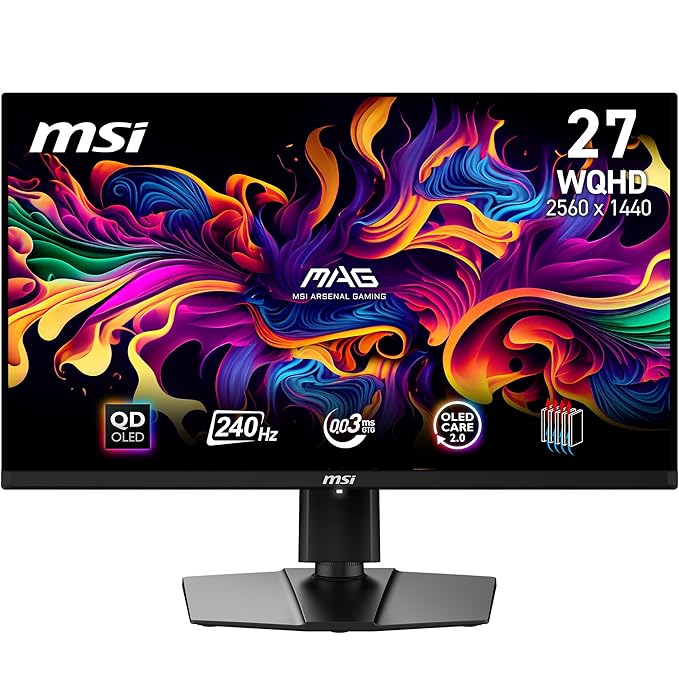
MSI MAG 271QPX QD-OLED E2
Price as of May 2026Confirm live on Amazon.inQD-OLED 240Hz
The MSI MAG 271QPX QD-OLED is the showpiece of this list. QD-OLED means every pixel lights itself, so blacks are flawless and contrast is effectively infinite, and the colour pops in a way no IPS or VA can. Running QHD at a blazing 240Hz with near instant pixel response, it is equally at home in atmospheric single player worlds and fast competitive matches.
This is the panel that justifies stepping up to Rs 60,000. The one caveat is the OLED burn in risk if you display static taskbars or logos for hours daily, though MSI bakes in protection features. For a screen used mainly for gaming and media, it is the best image you can buy at this budget.
What works
- QD-OLED, perfect blacks and infinite contrast
- 240Hz with near instant response
- Stunning colour for games and media
- USB-C and OLED burn in protection
What is bad
- Small burn in risk from static elements
- QHD, so less pixel dense than the 4K picks
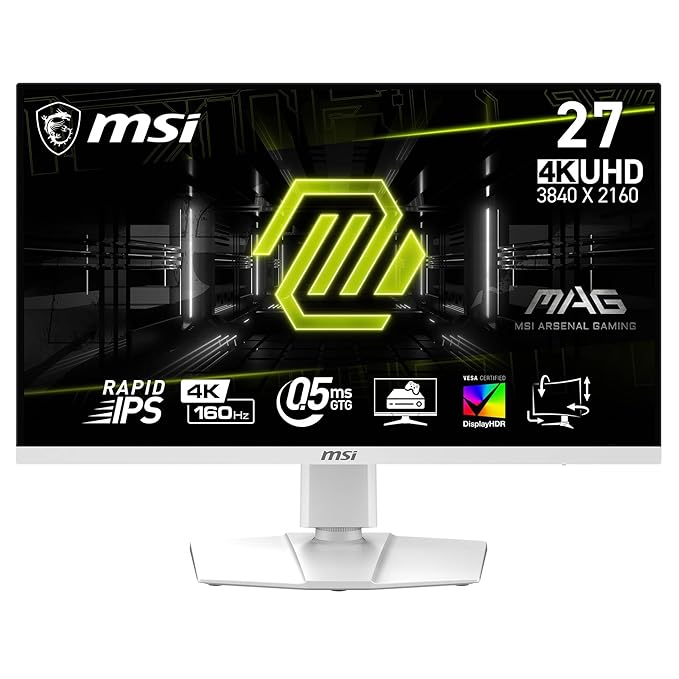
MSI MAG 274URFW
Price as of May 2026Confirm live on Amazon.in4K 160Hz
The MSI MAG 274URFW is the 4K gaming pick for players who want pixels and frames without OLED caveats. The 27 inch 4K Rapid IPS panel is razor sharp and runs at 160Hz, a combination that needs a strong GPU but rewards you with both crisp detail for slower games and fluid motion for fast ones. USB-C makes it a tidy single cable setup.
Choosing this over the QD-OLED is a choice of priorities, you trade OLED contrast for higher resolution and zero burn in risk, which makes it the safer pick if the monitor also pulls daily work duty. At Rs 55,115 it is the most versatile high end panel here.
What works
- 4K and 160Hz, sharp and fast
- Rapid IPS, no burn in risk
- USB-C single cable setup
- Versatile for work and play
What is bad
- IPS blacks cannot match OLED
- 4K at 160Hz needs a powerful GPU
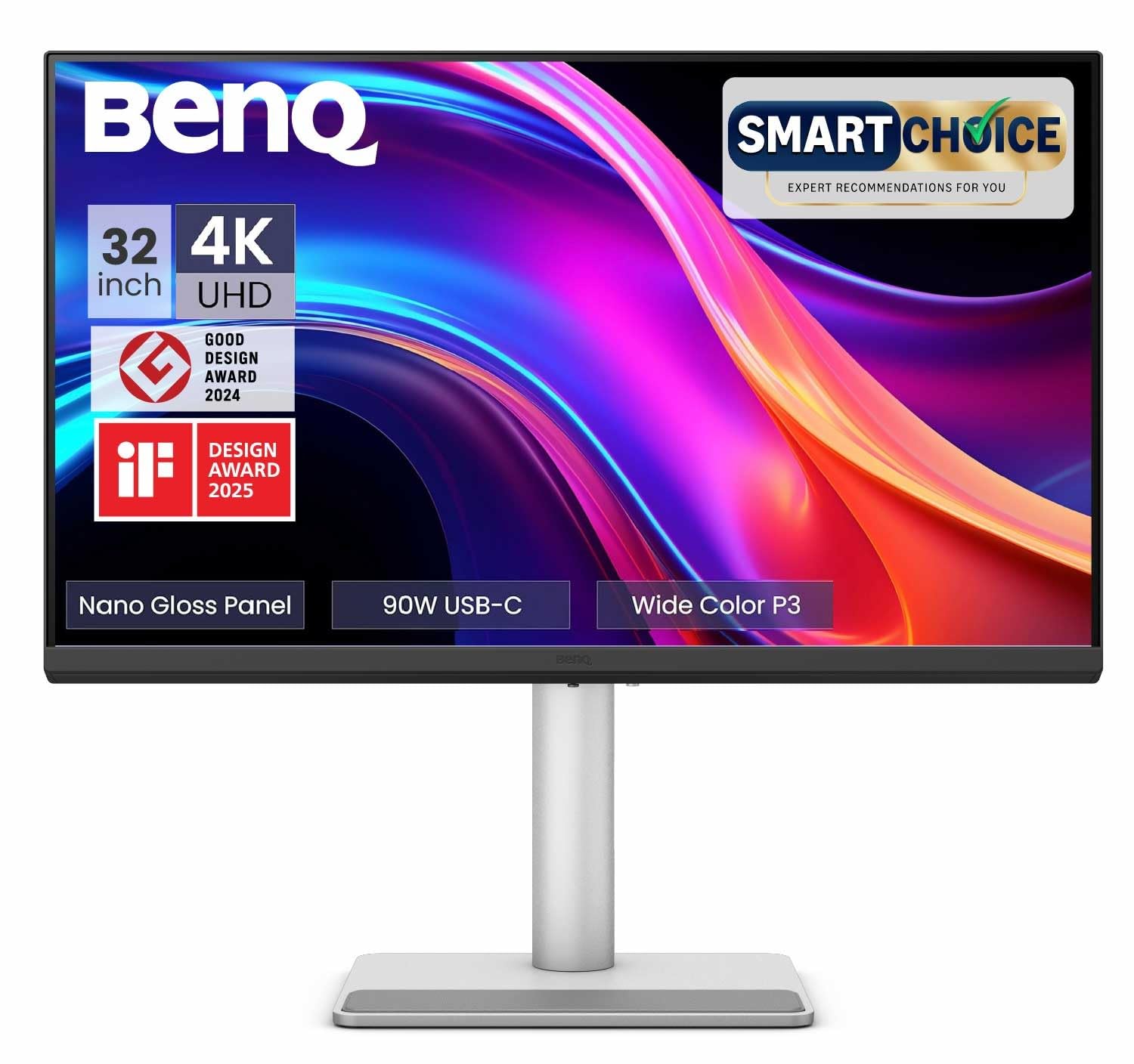
BenQ MA320UP
Price as of May 2026Confirm live on Amazon.in32 inch 4K
The BenQ MA320UP is the big screen pick for a mixed setup. At 32 inch it is the largest panel here, the 4K Nano Gloss IPS is sharp and reflection resistant, and USB-C with power delivery makes it a clean laptop and console hub. For PS5 or Xbox, which target 4K at 60 frames, the size and clarity are a treat, and for editing the colour and screen space are excellent.
Be clear about the trade, it runs at 60Hz, so it is not a fast PC gaming monitor. It is a 4K all rounder that suits console gaming, creative work and media far better than competitive PC play. If your main rig is a console or your day is creative work with gaming on the side, the 32 inch 4K canvas is worth it.
What works
- Largest panel here at 32 inch 4K
- Excellent for PS5 and Xbox at 4K60
- Nano Gloss IPS, sharp and reflection resistant
- USB-C hub for laptop and console
What is bad
- 60Hz, not for fast PC gaming
- Big screen needs a deep desk
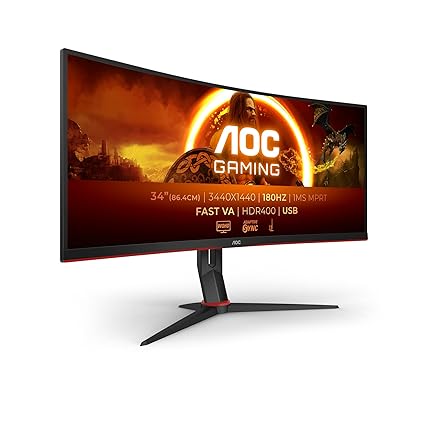
AOC CU34G2XPD
Price as of May 2026Confirm live on Amazon.in34 inch UW 180Hz
The AOC CU34G2XPD is the immersion flagship. The 34 inch curved ultrawide panel at 3440×1440 fills far more of your vision than a 16:9 screen, transforming racing games, flight sims and open world RPGs, and at 180Hz on a VA panel it stays fast and high contrast. USB-C and a solid stand round out a genuinely premium ultrawide.
Ultrawide remains a specific taste. The width does little for competitive shooters, some games handle the aspect ratio poorly, and a 34 inch curved panel demands a deep desk and a capable GPU. But for immersive single player and serious multitasking, where the extra horizontal space is gold, it is the most cinematic pick at this budget.
What works
- 34 inch curved ultrawide, hugely immersive
- 180Hz VA, fast with deep contrast
- Brilliant for racing, sims and RPGs
- USB-C and a sturdy stand
What is bad
- Width wasted in many competitive shooters
- Needs a deep desk and a strong GPU
All four compared
| Best for | Monitor | Price | Panel | Refresh | Buy |
|---|---|---|---|---|---|
| OLED | MSI MAG 271QPX QD-OLED | Rs 59,944 | QD-OLED | 240Hz | Amazon |
| 4K gaming | MSI MAG 274URFW | Rs 55,115 | Rapid IPS 4K | 160Hz | Amazon |
| Console + work | BenQ MA320UP | Rs 56,998 | IPS 4K 32 in | 60Hz | Amazon |
| Ultrawide | AOC CU34G2XPD | Rs 55,115 | VA UW | 180Hz | Amazon |
Four panels, four different ideals, all within a few thousand rupees of each other. One QD-OLED for the best image, a 4K IPS for sharp high refresh gaming, a 32 inch 4K canvas for console and creative work, and a curved ultrawide for immersion. Price barely separates them, so your choice comes down to which experience you want and the graphics card you can pair it with.
QD-OLED at the top, the panel that justifies the spend
If there is one reason to spend Rs 60,000 on a monitor, it is QD-OLED, and the MSI 271QPX is why this tier exists. Where IPS produces grey tinted blacks in a dark room, OLED switches pixels fully off for perfect, inky blacks and effectively infinite contrast, and QD-OLED layers on richer, brighter colour. Combined with the near instant pixel response that only OLED offers and a 240Hz refresh, the result looks and feels better than anything IPS or VA can do at any price below it. The trade is the familiar OLED caution, a small long term burn in risk from static on screen elements, well managed by modern protection features but worth knowing if the screen doubles as an all day work display. For gaming and media, nothing here comes close.
4K, ultrawide or OLED, picking your flagship
Beyond OLED, this tier offers three more flavours of flagship, and the right one depends on how you play. Go 4K, like the MSI 274URFW or the big BenQ, if pixel sharpness and desktop space matter most and you have the GPU to drive it, ideal for visually rich single player games and creative work. Go ultrawide, like the AOC, if immersion is your priority and you love racing, sims and open world games, accepting that competitive shooters gain little from the width. Or go QD-OLED for the outright best image quality. There is no wrong answer at this budget, only the one that fits your library and setup. Match the panel to what you actually play rather than chasing the biggest number on the box.
The graphics card this tier demands
A Rs 60,000 monitor is a poor purchase without the graphics card to feed it, and this is where balance matters most. To drive 4K at high frame rates you want an RTX 4080 class card at minimum, and a 4090 to do it comfortably in demanding titles. To truly feed a 240Hz OLED you also need serious horsepower, since hitting 240 frames is hard even at QHD. An ultrawide sits between QHD and 4K in load and wants a strong card too. The rule at this tier is simple and unforgiving, the GPU should cost as much as or more than the monitor. Pair a flagship panel with a mid range card and you will run 4K at low frame rates or never approach 240Hz, wasting most of what you spent. Budget the card first.
Stock and pricing at the high end, why it moves fast
One practical thing sets this tier apart from the cheaper ones, availability. The Rs 50,000 to 60,000 band is a narrow, low volume slice of the market, so retailers stock fewer units of each panel and the popular ones sell through quickly, after which listings go to limited stock or vanish for weeks. Prices swing more too, a panel can drop a few thousand rupees in a sale and jump back after. The practical upshot, if you have settled on a panel and it is in stock at a fair price, that is the moment to buy rather than wait for a better deal that may not come before it sells out. This is also why every price here carries a confirm live note, because at this tier the listing genuinely changes week to week.
If esports refresh rates are the goal, our 240Hz monitor guide for India answers whether the upgrade shows.
Best Gaming Monitors by Budget
Jump to the right price band for your setup. Every list is India-priced and updated for 2026.
See all best gaming monitors in IndiaFrequently asked questions
The verdict
At Rs 60,000 the smartest buy is the one that matches why you came to this tier. The MSI MAG 271QPX QD-OLED at Rs 59,944 is my top pick and the real reason to spend this much, the best image quality money buys here. The MSI MAG 274URFW is the no compromise 4K gaming panel, the BenQ MA320UP is the big 32 inch 4K canvas for console and creative work, and the AOC CU34G2XPD is the immersive ultrawide. But be honest with yourself, if you do not want OLED, the Rs 50,000 tier already has you covered, so only step up here for the panel that genuinely earns it.
Building the full rig? Step down to the best gaming monitor under Rs 50,000 or the best under Rs 40,000, or the best under Rs 20,000 on a tighter budget, and pair your screen with the Rs 1,00,000 PC build.